AN ECOLOGY OF LINE
2026
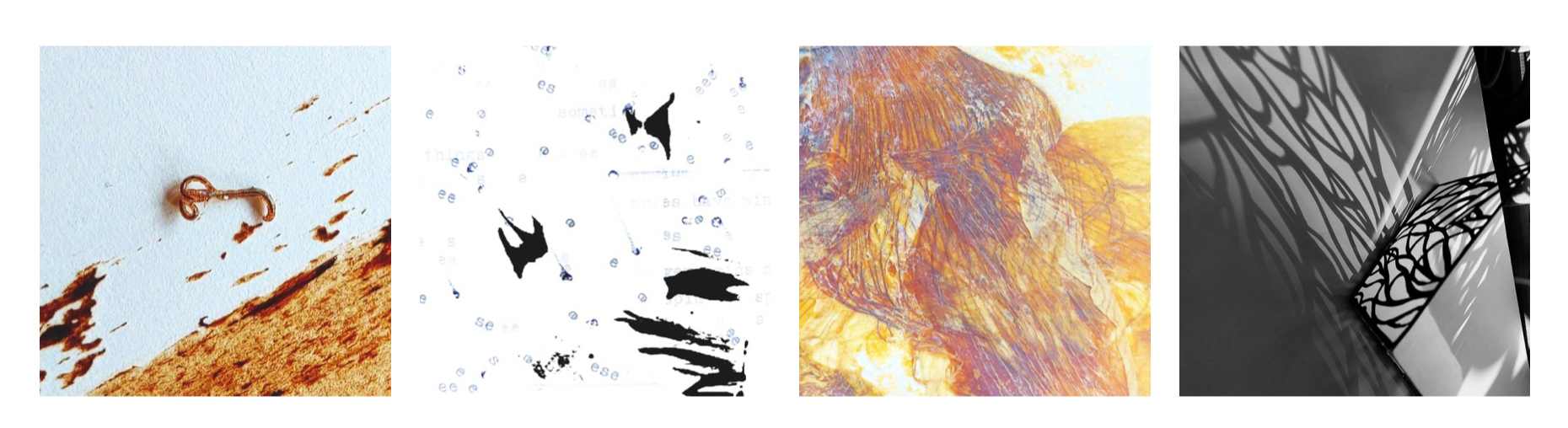
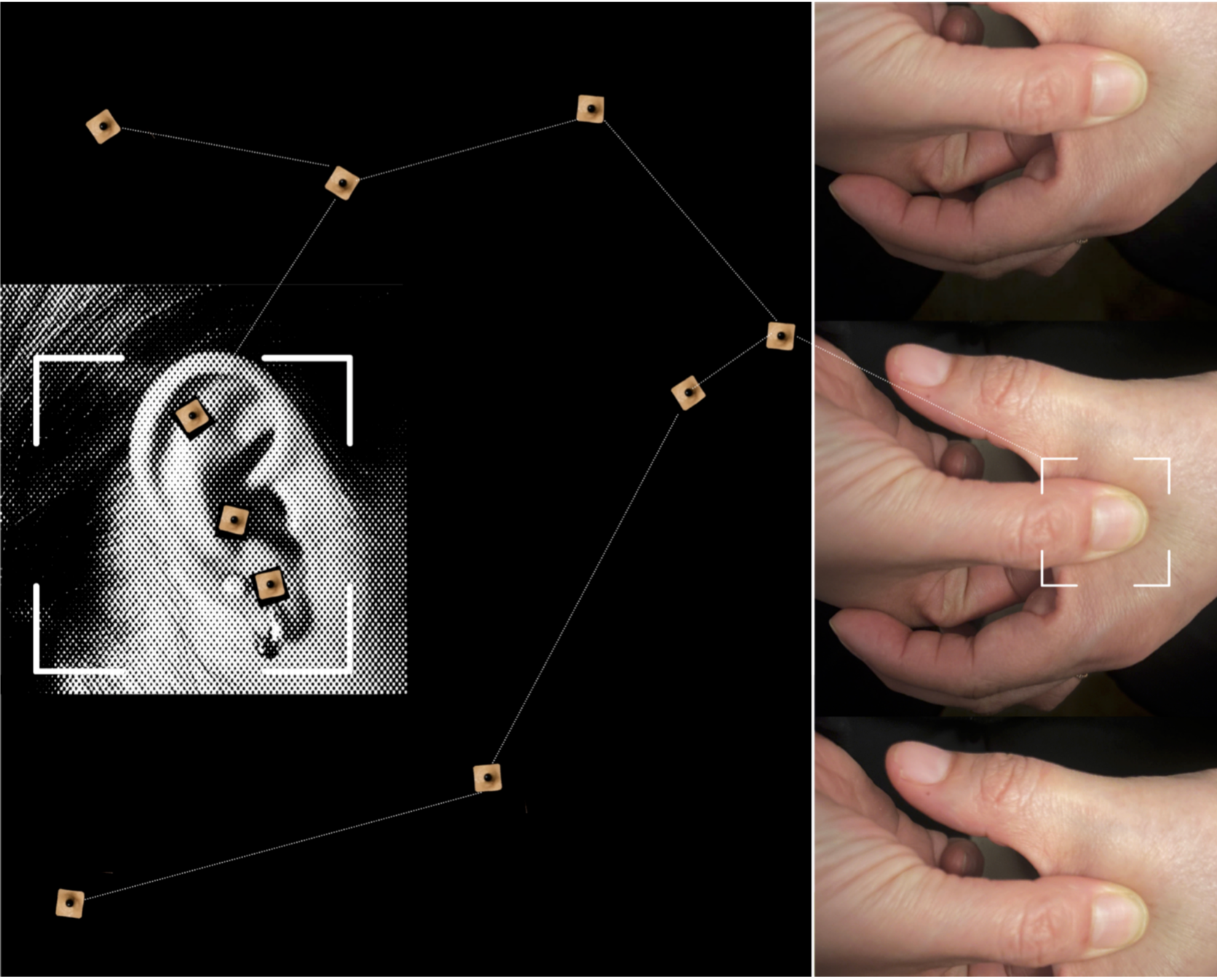
This exhibition showcases the work of the Foundation & Advanced Ecology of Line artists of 2026. I’ve been cultivating an Experimental Ecology of Line for three years now. The foundation course has had four cohorts and the advanced class has had two. If you’re new to this work, the 2024 & 2025 showcases give a good idea of what previous years’ participants have produced. Every artist makes from their uniquely embodied, environmentally-embedded and socio-culturally informed perspective, and every year the resulting work sheds new light on what an ecology of line might be. It is a continually evolving enquiry and one I feel privileged to facilitate.
Informed by Tim Ingold’s provisional taxonomy of line, the foundation course explores threads (3D, self-supporting lines), traces (2D lines, reliant upon surface), dots & blobs (the falling apart & aggregation of lines), invisible & imaginary lines, and the intersection of all of these. Advanced courses extend and complexify these categories into scores / narrative lines / heart lines / waves & flows / correspondence / boundary lines etc. To date, our showcase normally aggregates around the foundational categories of line, with some expansion. This year is different.
A six month course is a serious chunk of time to be thinking and making together. There are births, deaths, break-ups, marriages, political and environmental upheavals. Huge life events entwine with the creative questions we explore and this reflects in the particular flavour of work submitted each year. This year what has emerged is a repeated concern with breaking and repair. A creative-critical enquiry into ecologies of line might appear abstract in the face of major personal or global events, but a study of lines is a study of connection. An ecology of line is a perceptual enquiry into linear transformation and as such, it is a study of the treatment, behaviour and material or energetic constitution of connection. Some stages of human history accelerate the breaking over the making of these connections. This necessitates a corresponding surge in repair. The 2026 Ecology of Line showcase suggests that time is now. If you too are interested in the creative study of connection, the 2027 foundation & advanced courses are now open.
A full curator’s essay follows the showcase. Please read more in due course, but now, to the making…
We hope you enjoy the show!
Camilla A Nelson
Curator & Convenor
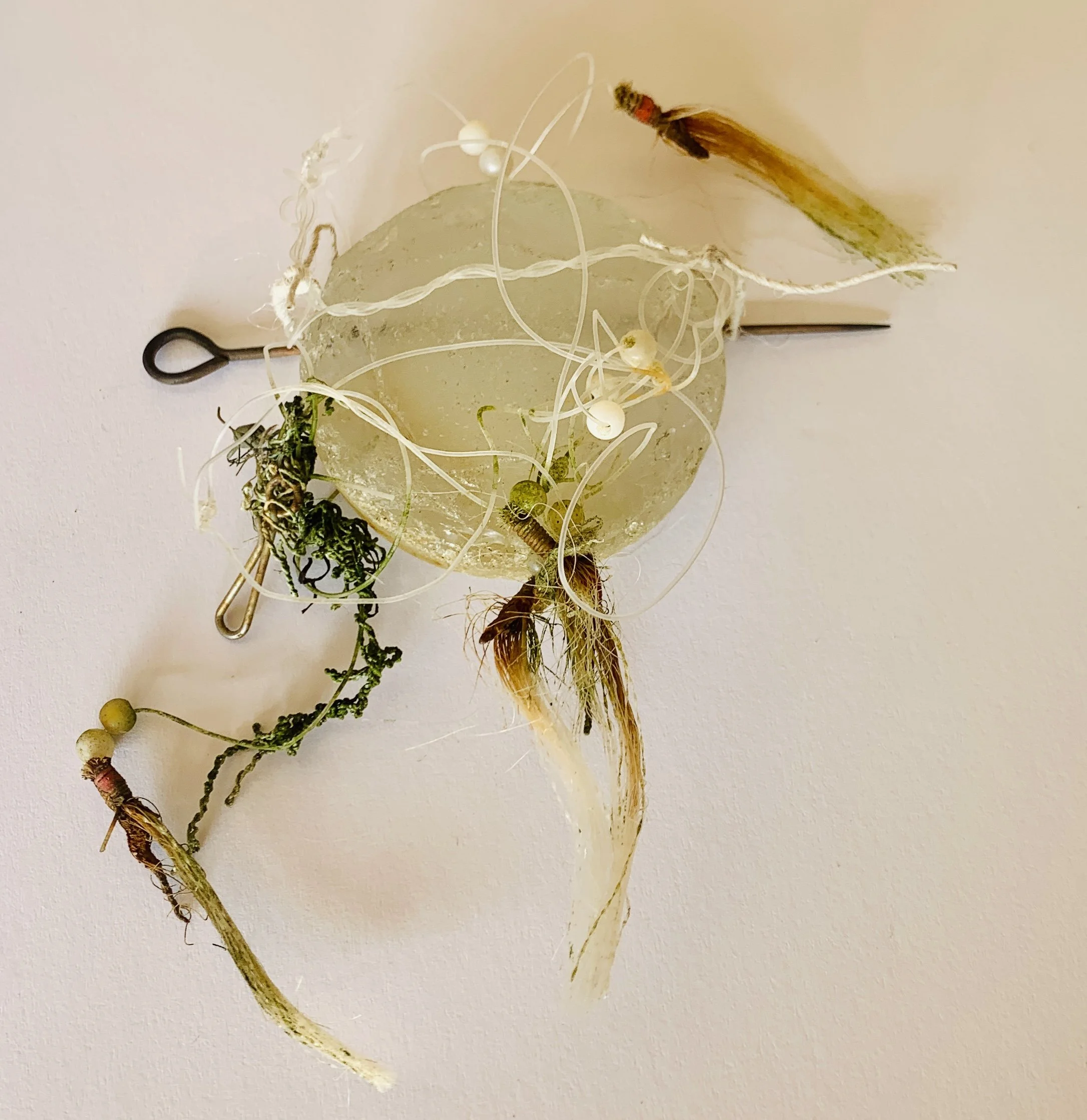
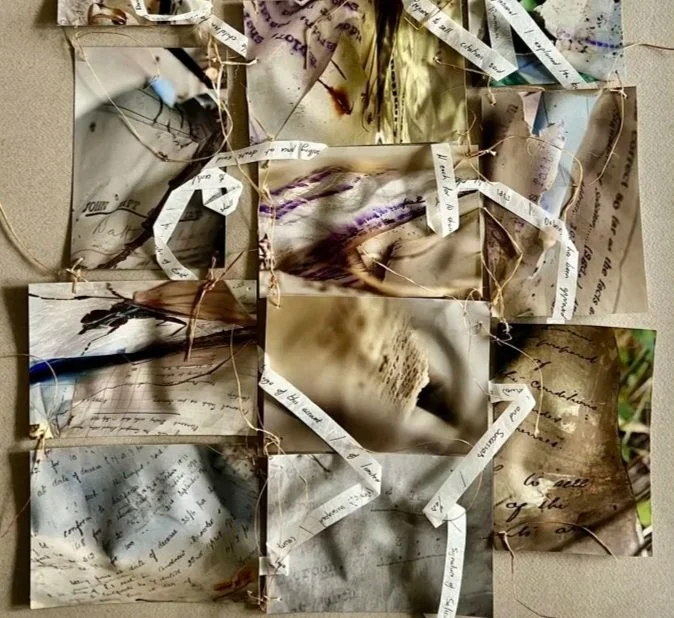
artists
Anna Torres Mallma Anna Masters Chris Partridge A. Rosemary Watson Rachel Smith Susanne eules Lucy Harvest Clarke Janie Davies Karen Neuberg Jennifer Spector Julia Cowie Amanda Lynch Karen Packwood Sarah Rhys Susie Campbell
Janie Davies
Dancing Tree
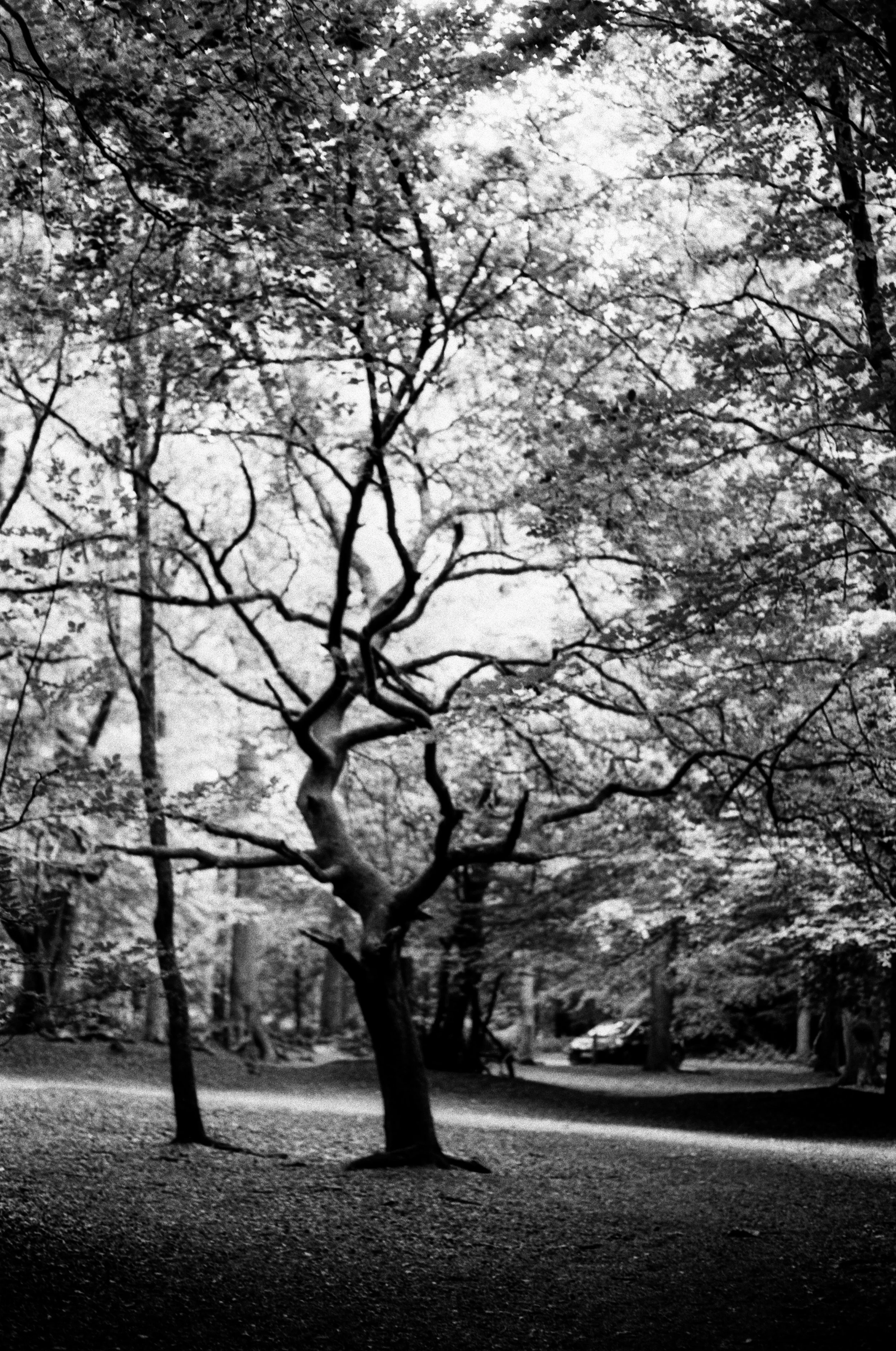
Through multimedia, Janie Davies’ practice explores the liminal space where past meets present. The sites she explores have a historical significance and draw upon memory. In the capacity of a psycho-geographer, she traces, records and documents the environment. This mode of tracing is drawn from the choreographic and textural parts of my practice.
julia cowie
Storm Cast
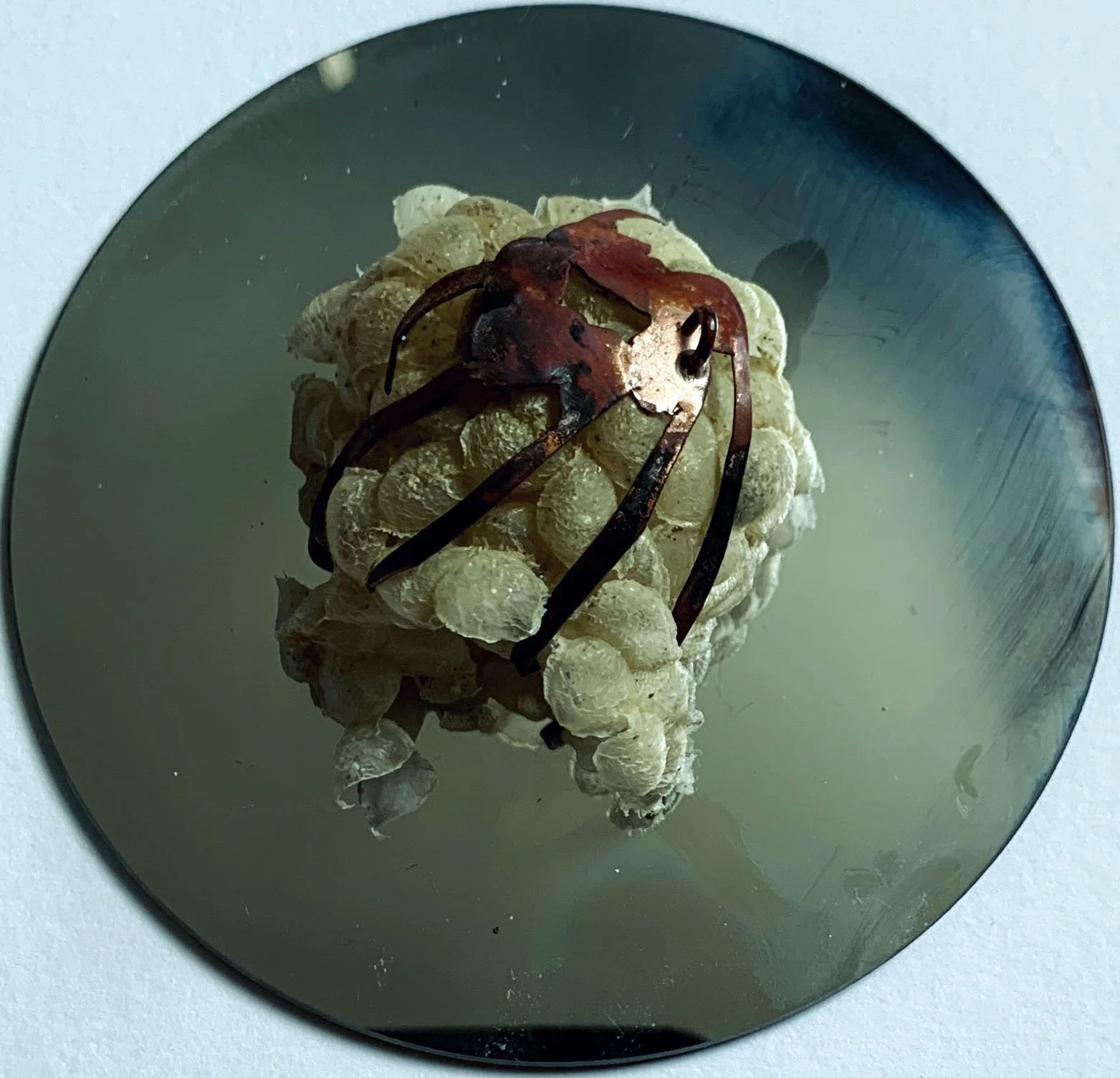
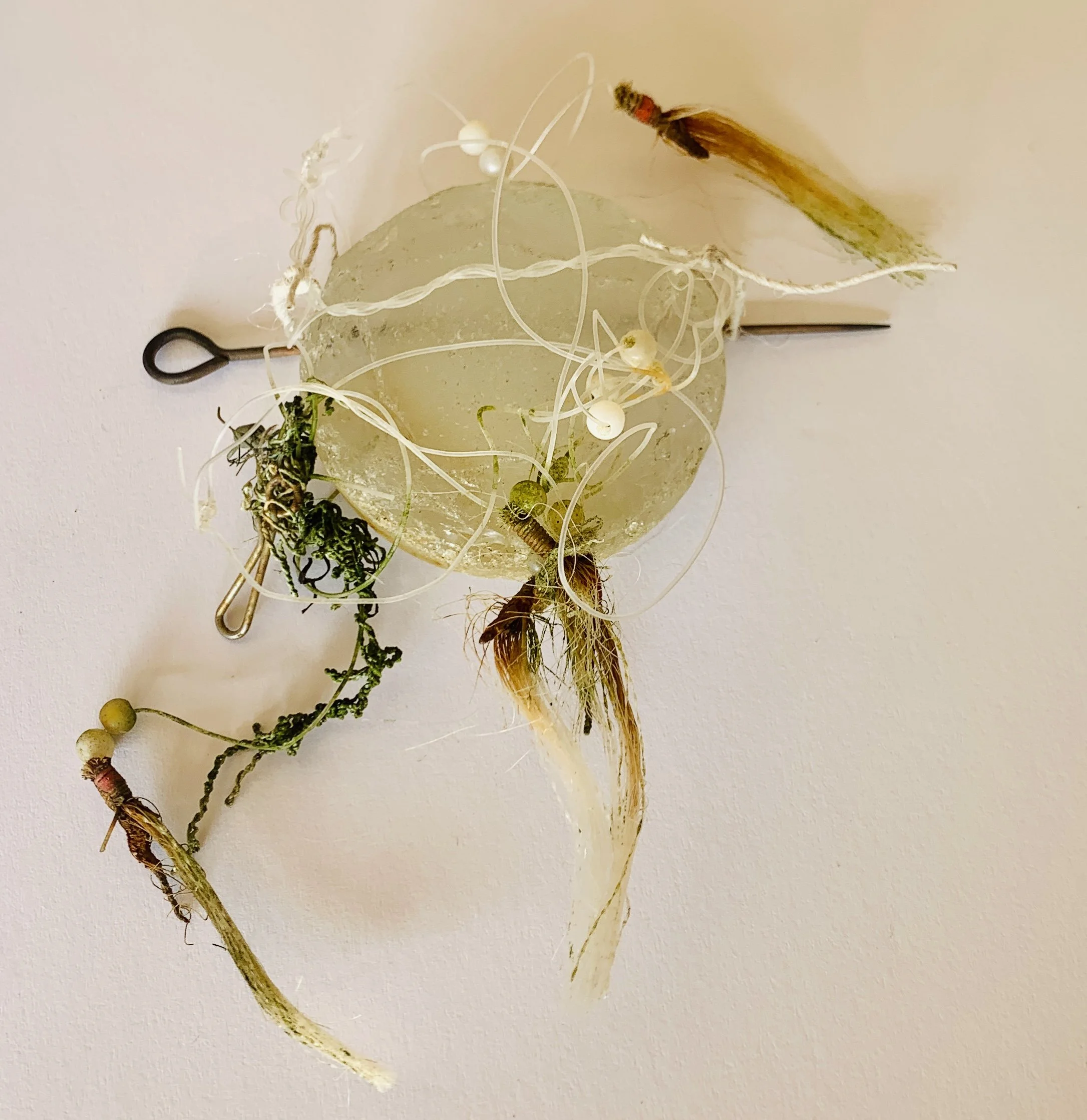
Ghost Gear blanket pin brooch.
Bottle glass, fishing line, lures, copper, silver, crystal.
Buckie pendant / pin.
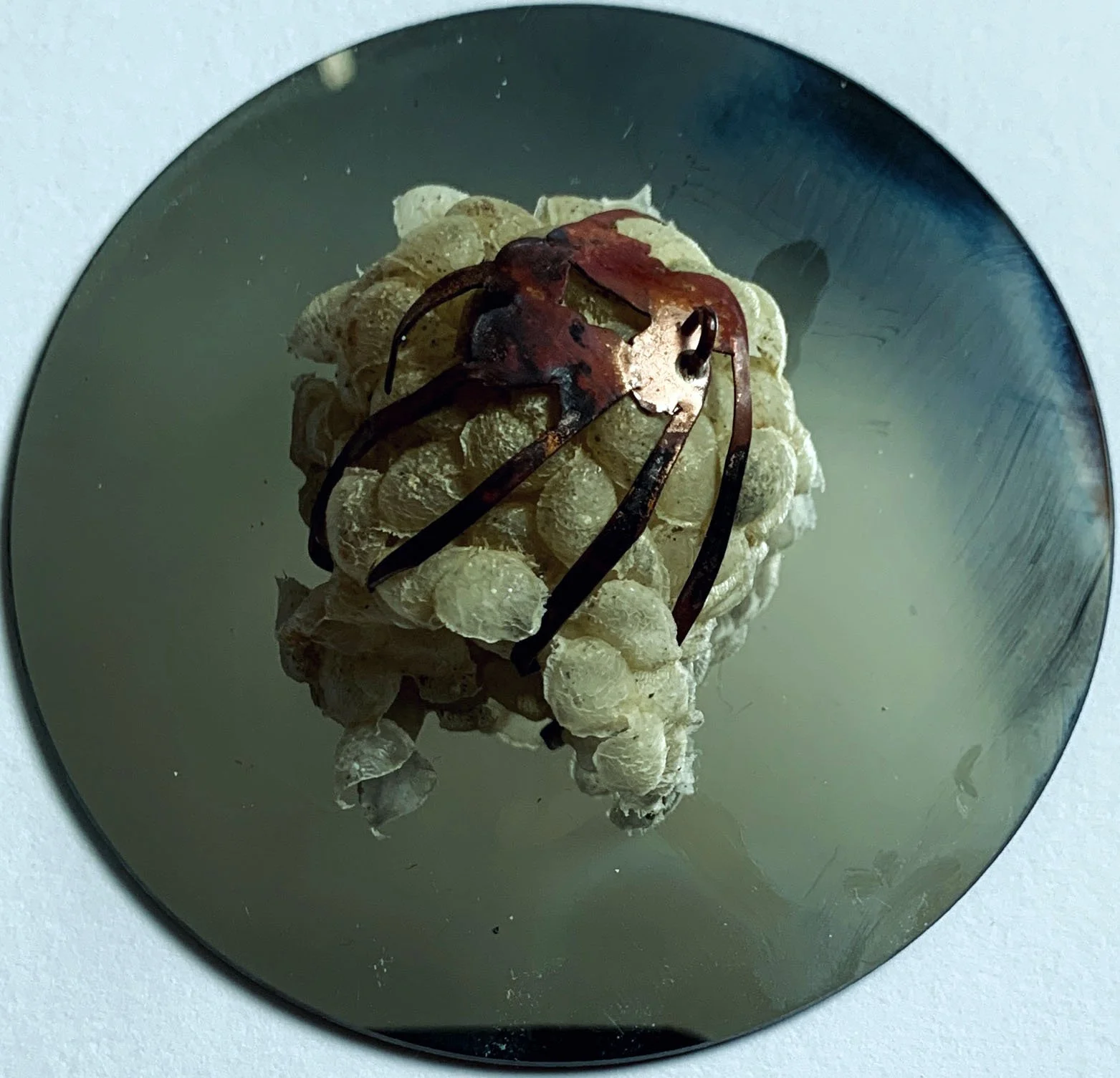
Common whelk egg case, copper, crystal, patina.
Storm Cast explores the narrative of the climate emergency and nature depletion as a result of mankind’s actions and inactions, using detritus found on the tide line. Buckies (common whelks) used to be very common but bottom trawling and chemical poisoning from anti-fowling paint on boats has greatly reduced their numbers. The egg case is now a rare find on the tide line and the shells are becoming almost as rare.
Julia Cowie is a jeweller and metalsmith. Her focus is sustainable, environmentally-aware making, exploring her place in the landscape, nature and history. She works with materials from her local landscape, inspired and informed by traditional processes. The pieces are domestic in scale, using non-precious metal and found objects. Julia’s work explores how jewellery traditions provide frameworks for questions about nature depletion and the climate emergency.
anna masters
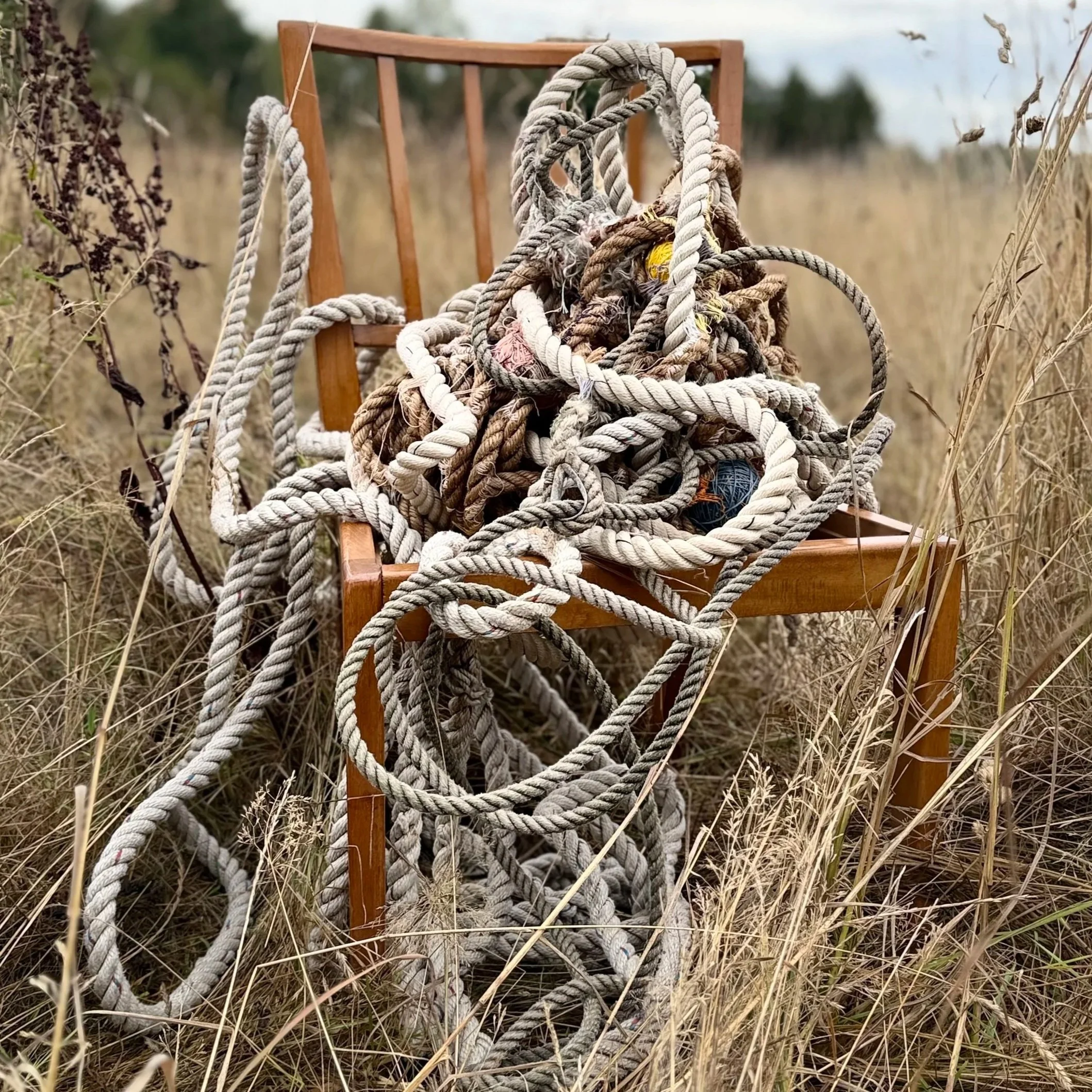
(Ropes): Muscle Memory
(The Things That Keep Me Here)
(Audio): System Reset
Anna Masters’ practice explores repair as an artistic process. Working with broken, disregarded or devalued materials, she transforms forgotten elements into artworks. From petal-filled landscapes to clocks that have disentangled themselves from the ticking of time, Masters takes fragments of the lived world and negotiates new futures for them.
karen packwood
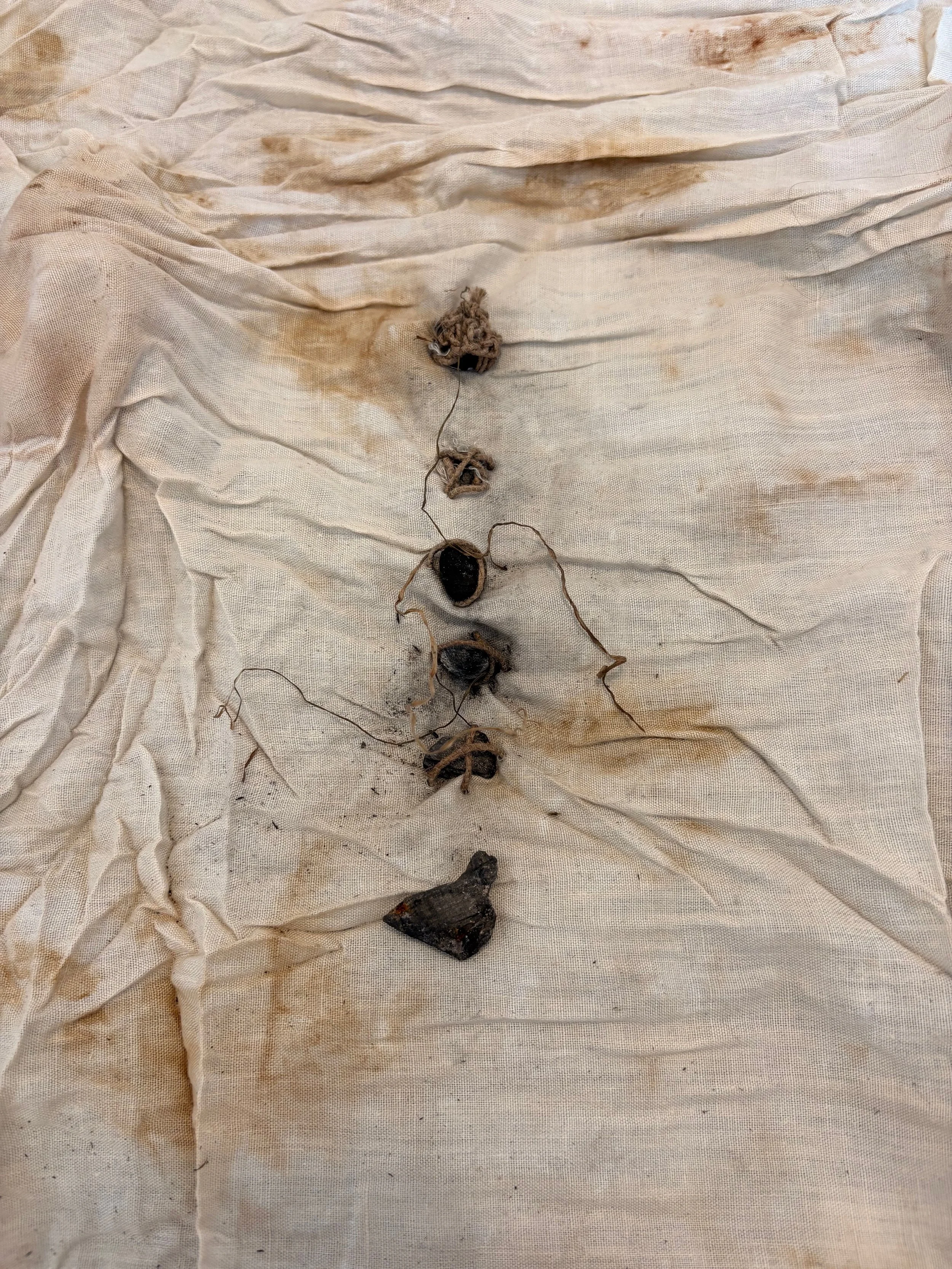
Bloodlines I: Consciousing Lineage
Patterns of trauma descend unconsciously through bloodlines, passing from one generation to another. Travelling along lines through silence, gesture, memory and inheritance, they bind one life to those that came before. Stains of shame mark the fabric. Charcoal fragments honour the inherited burden. Knots tighten where words have been lost. These lines cross and tangle, representing patterns of trauma we may inherit without knowing their origins. To conscious lineage is to begin tracing those heritage lines, to notice what has been passed down, what has been woven into us, and where the threads of shame, sorrow, and trauma can be held, examined, and reimagined.
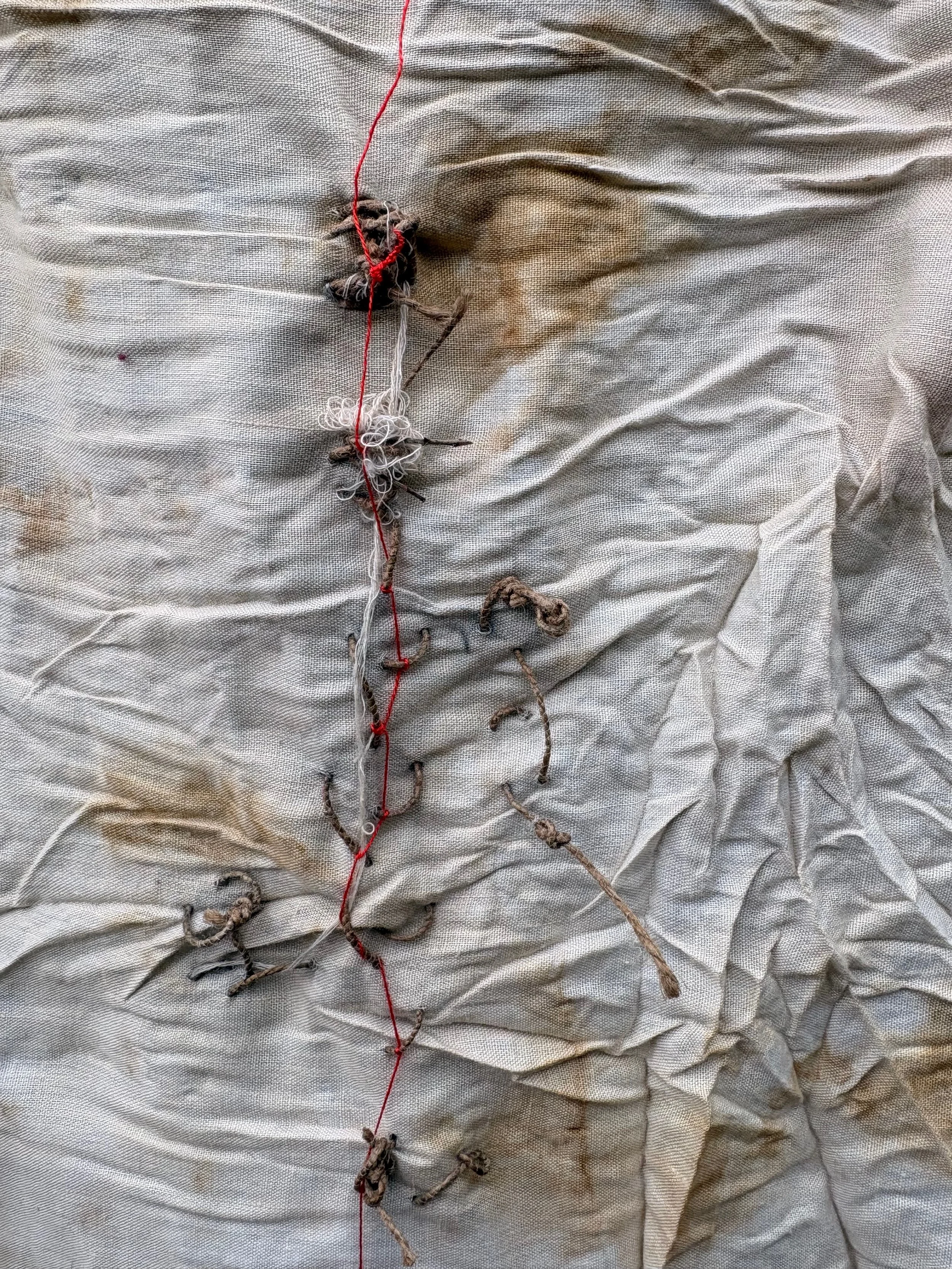
Bloodlines II: Consciousing the Unconscious
The reverse of the fabric reveals the hidden lines of trauma threaded through generations. Silenced, repressed, invisible and unknown, these threads pass unconsciously through familial lineage, binding one generation to another. To bring them into consciousness is to begin tracing their paths, following where they cross, repeat, knot and disappear. In making the hidden thread visible, patterns of repetition emerge: the echoes of what has been carried, inherited and left unspoken. What was once unconscious becomes traceable, what was invisible can be seen. The act of revealing creates the possibility of recognition, understanding and change.
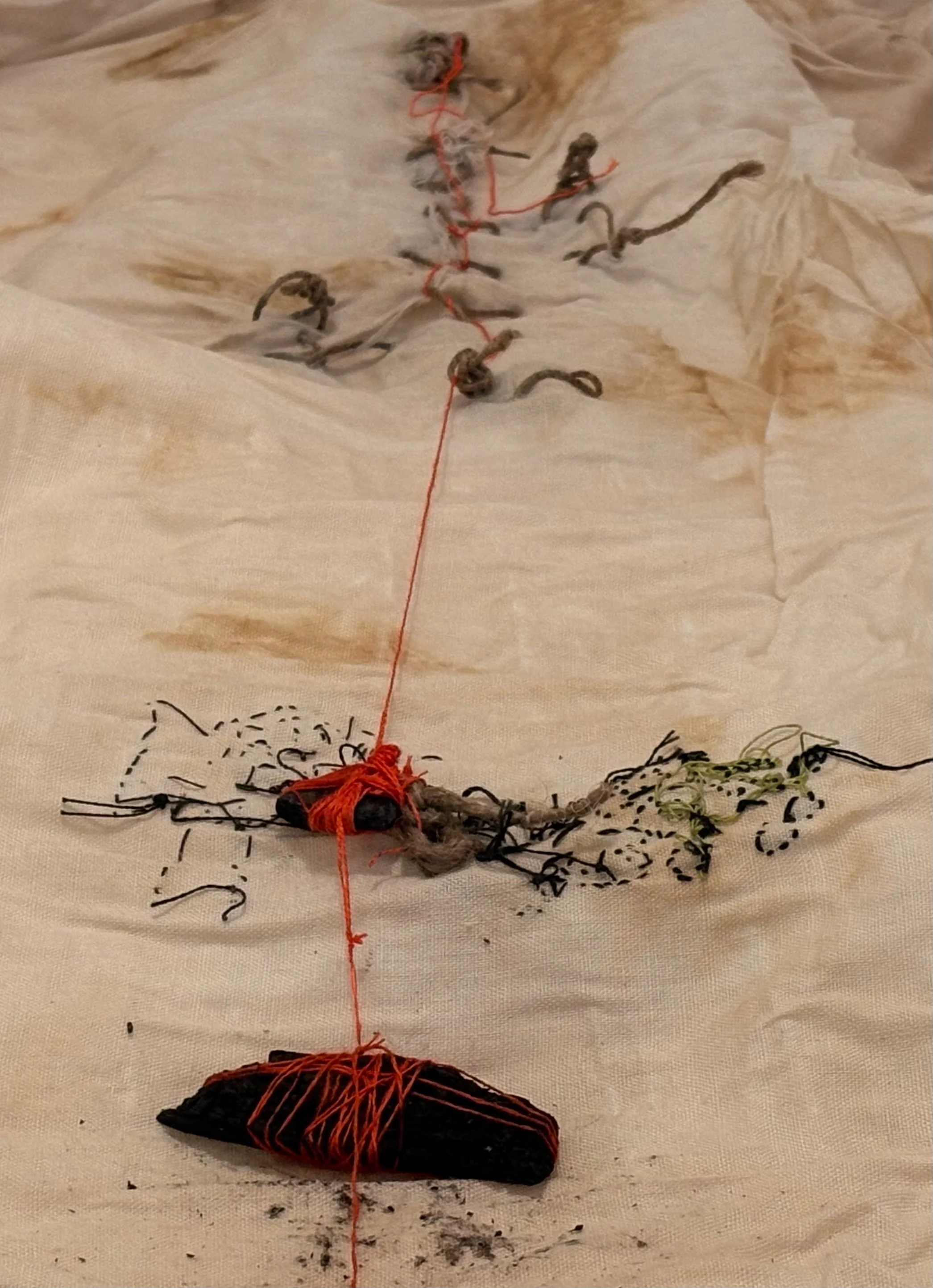
Bloodlines III: Consciousing Burden
The bloodline thread winds repeatedly around charcoal fragments, the weight of unconsciously inherited trauma made visible. Knotted into the thread are traces of ancestral trauma, forming symbols and icons across the stained fabric. Presenting as a landscape of inheritance, its contours rise and fall, a map of what has been carried. Yet this burden is not fixed. There is distance between generations; the raised thread can be traced, loosened, cut. In this act of consciousing burden, repetition becomes visible and the inherited pattern can be recognised. Severing the thread becomes an act of ritual release that frees the present generation, and those before it, from that which no longer needs to be carried.
Karen Packwood is a writer, dancer-artist and performer. Through her final-year PhD creative writing research at the University of Nottingham, she interrogates silence, post-trauma reclamation of Self, and the unconscious transmission of generational trauma. Her methodology includes textile poetry. Her poetry has been published by Nottingham Voices and The 87 Press.
Anna Torres Mallma
tracing repair
threads of repair
Anna Torres Mallma is a researcher in literature and the humanities based in Chicago. Her developing creative practice brings together writing, mapping, sound, image, and embodied observation to explore how space and movement are experienced through the senses. She is interested in recording and interpreting the visible and invisible traces of care, injury, and healing across human and nonhuman bodies and vulnerable landscapes
A. Rosemary Watson
untangling the invisible palimpsest
A. Rosemary Watson is a cross-disciplinary artist whose practice is primarily concerned with notions of memory, exploring her personal response to, and forming a record of, the constantly shifting and multi-layered nature of memory, which blends and blurs over time into a personalised version of history, whilst encompassing chance, intuition and spontaneity.
RACHEL SMITH
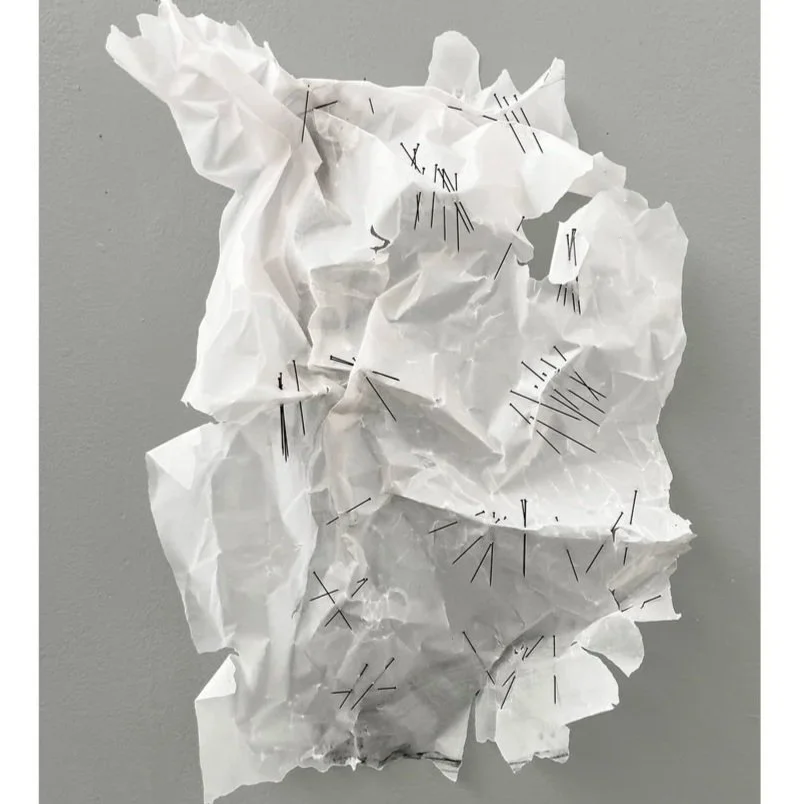
Holding a moment: an attempt to repair
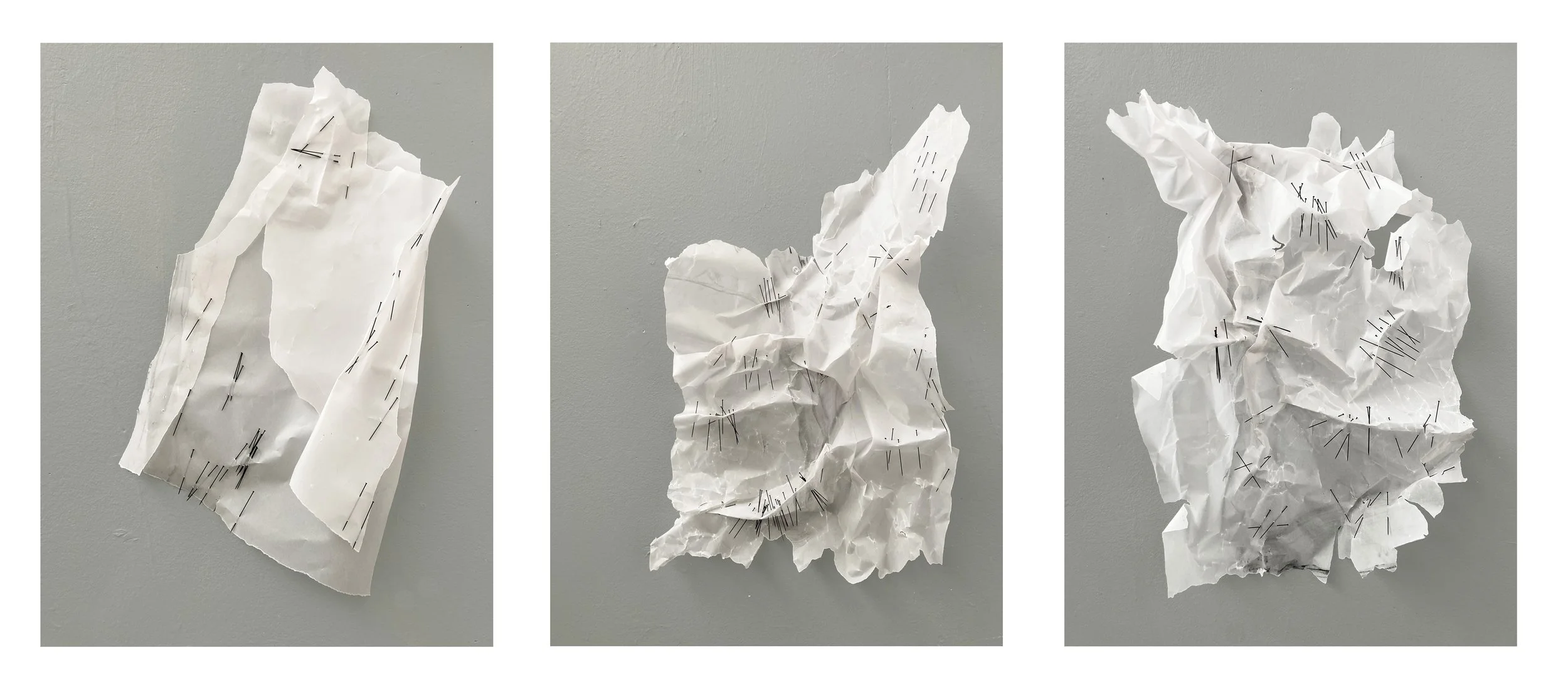
Materials: Vellum paper, graphite, and pins.
Entomology pins used to secure fine fabrics and insects here become a integral part of the drawing process and wider exploration of damage and repair. What is it that holds a body / a memory / a moment together? Materialising futile attempts to hold something in the face of collapse, while considering methods of dismantling and rebuilding, tethering and unravelling.
Towards Collapse
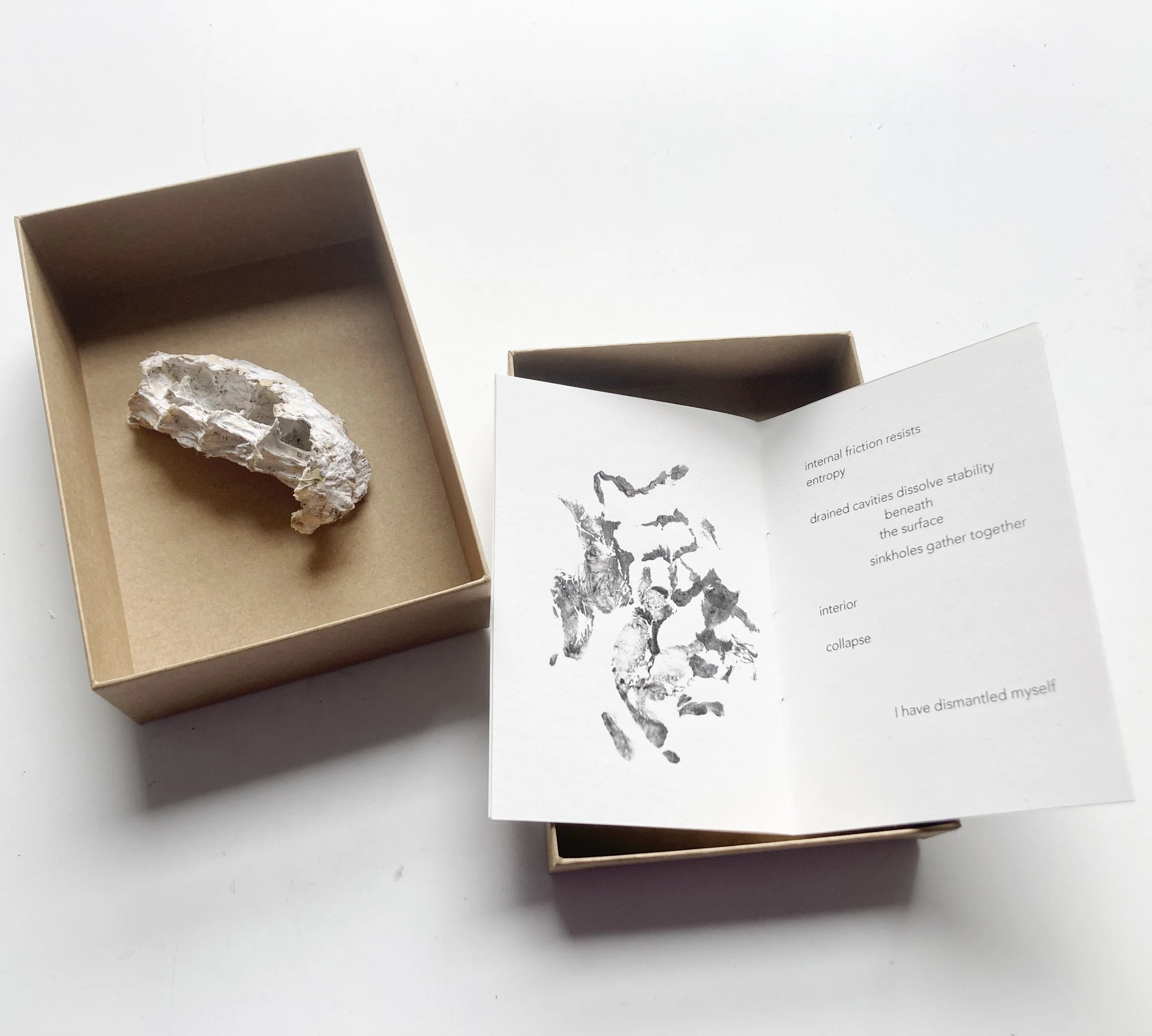
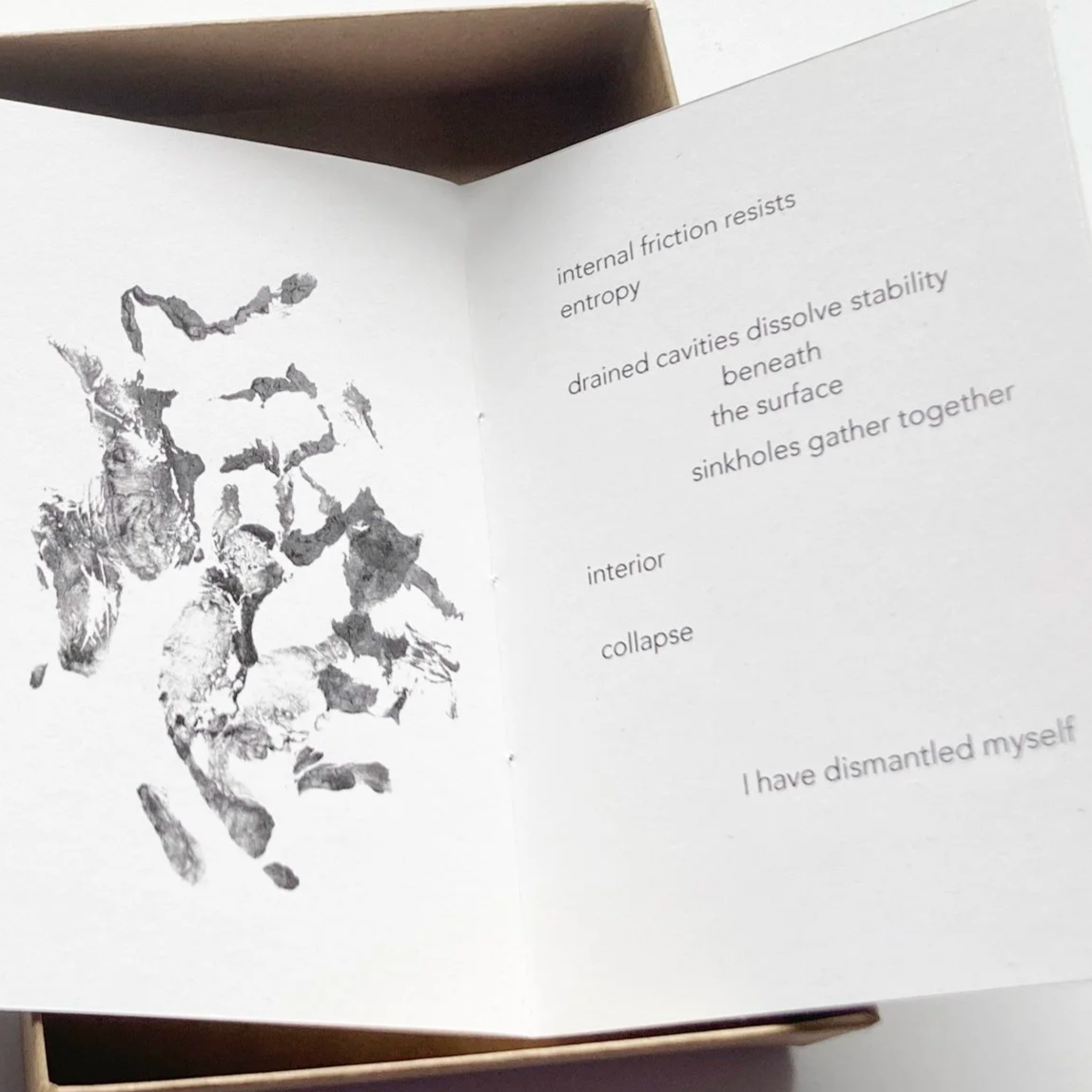
A poem pamphlet including graphite drawings, with original sculptural object, contained in a card box. Produced in an edition of 12.
An inherited collection of books, undermined. A physical process to break down, deface, and digest them. Torn, disordered pages are scattered and thrust together, pulped together into sculptural objects.
Rachel Smith works across Art and Writing ‘flying through’ existing texts, jumbling expected structures, using association, error, and distraction, exploring how sense might be sought, rejected, and re-fused. Her artist books are held in public collections: Tate Library Special Collections, V&A National Art Library, University College London, and The Henry Moore Institute.
susanne eules
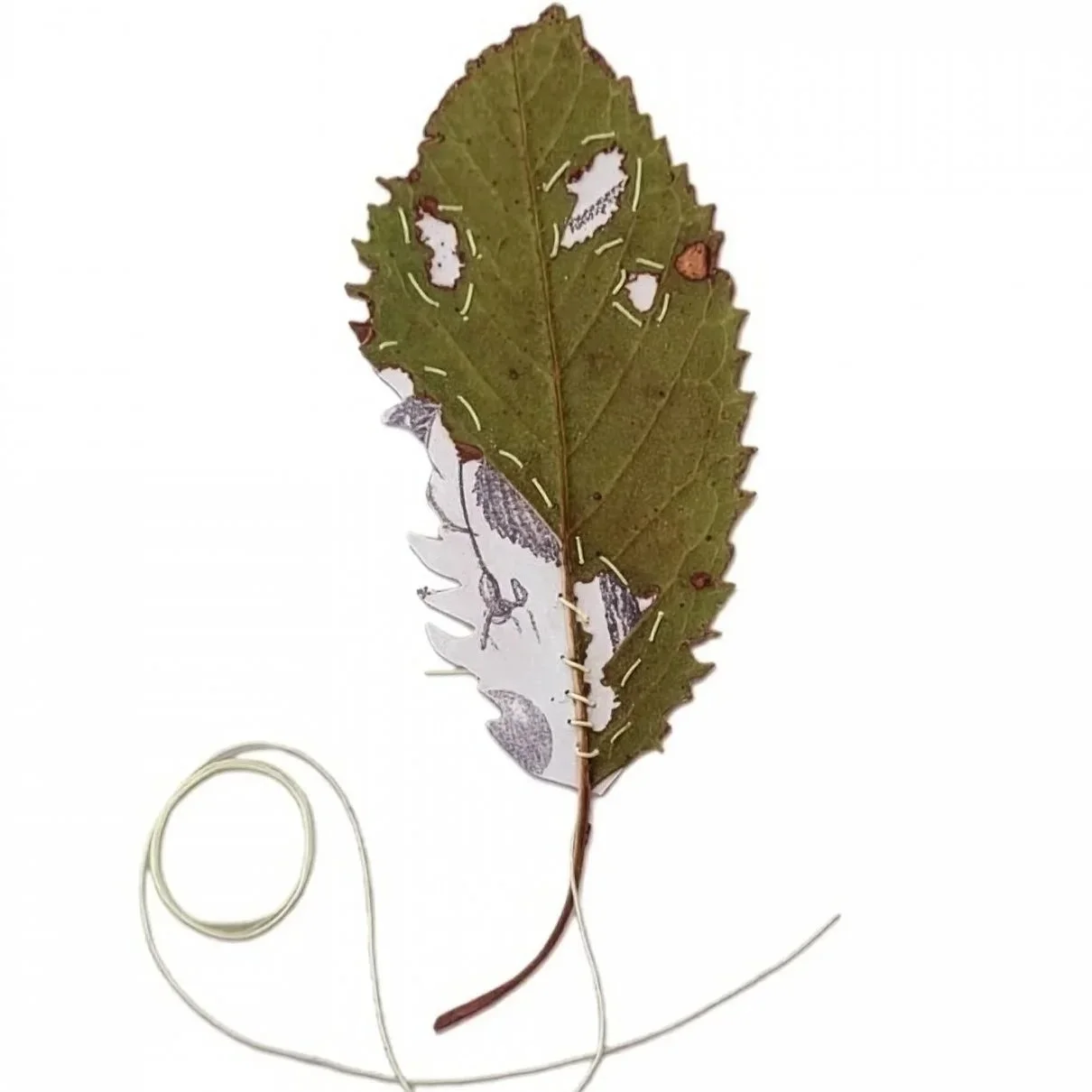
mending
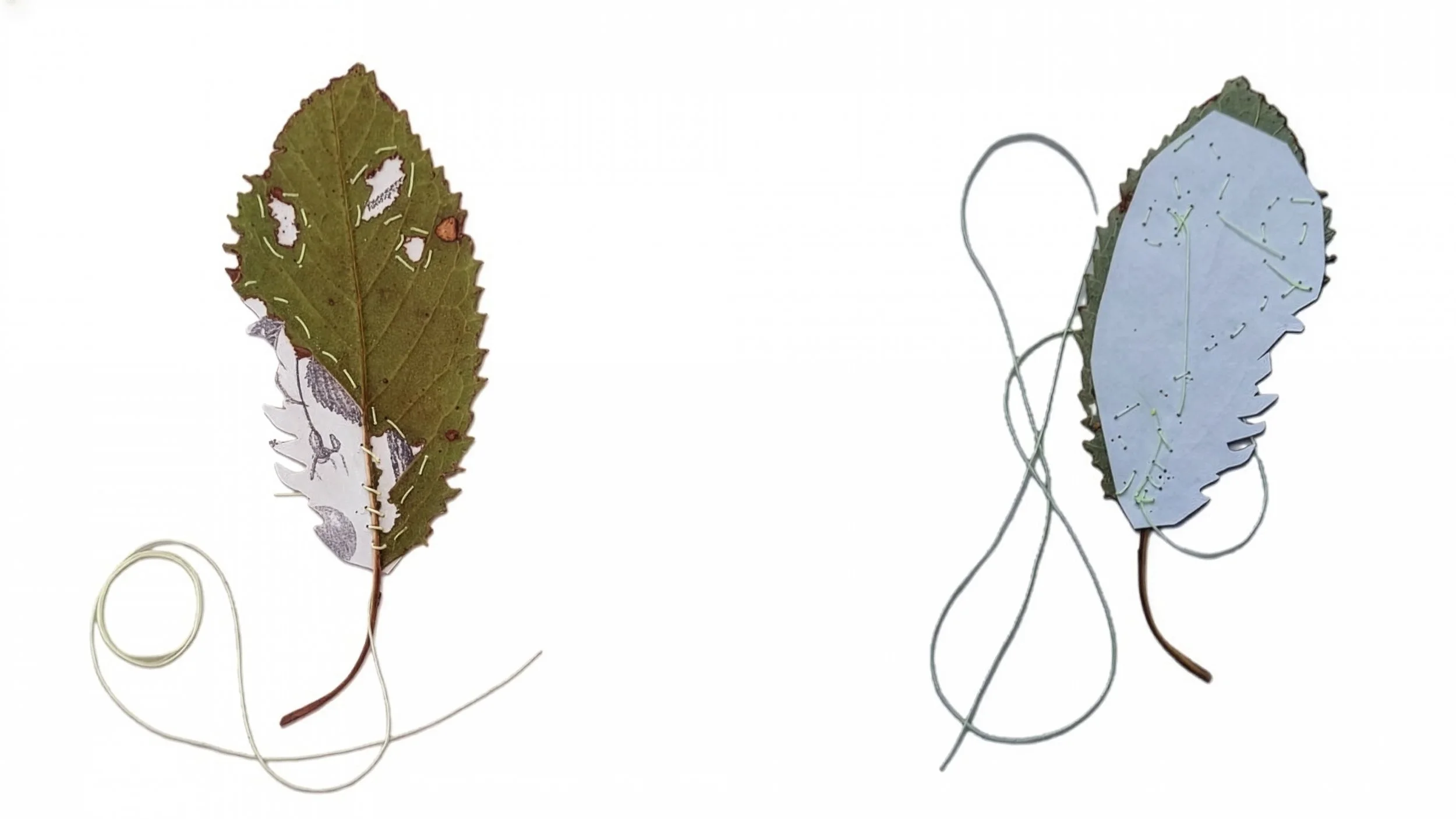
Prunus avium, commonly called wild cherry, is afflicted by Shot-hole disease, caused primarily by the fungus Wilsonomyces carpophilus that creates small holes in cherry leaves and affecting fruit and twigs, not generally lethal to healthy trees. Sewn onto an excerpt from a Plant identification guide.
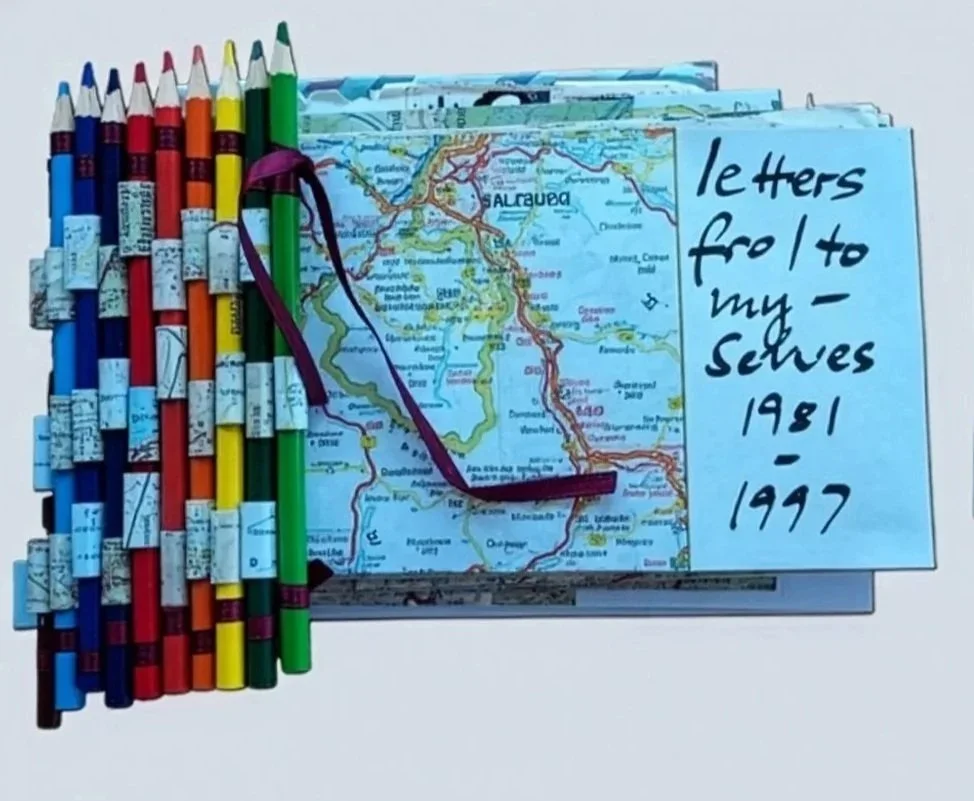
letters fro & to myselves (1981-1997)
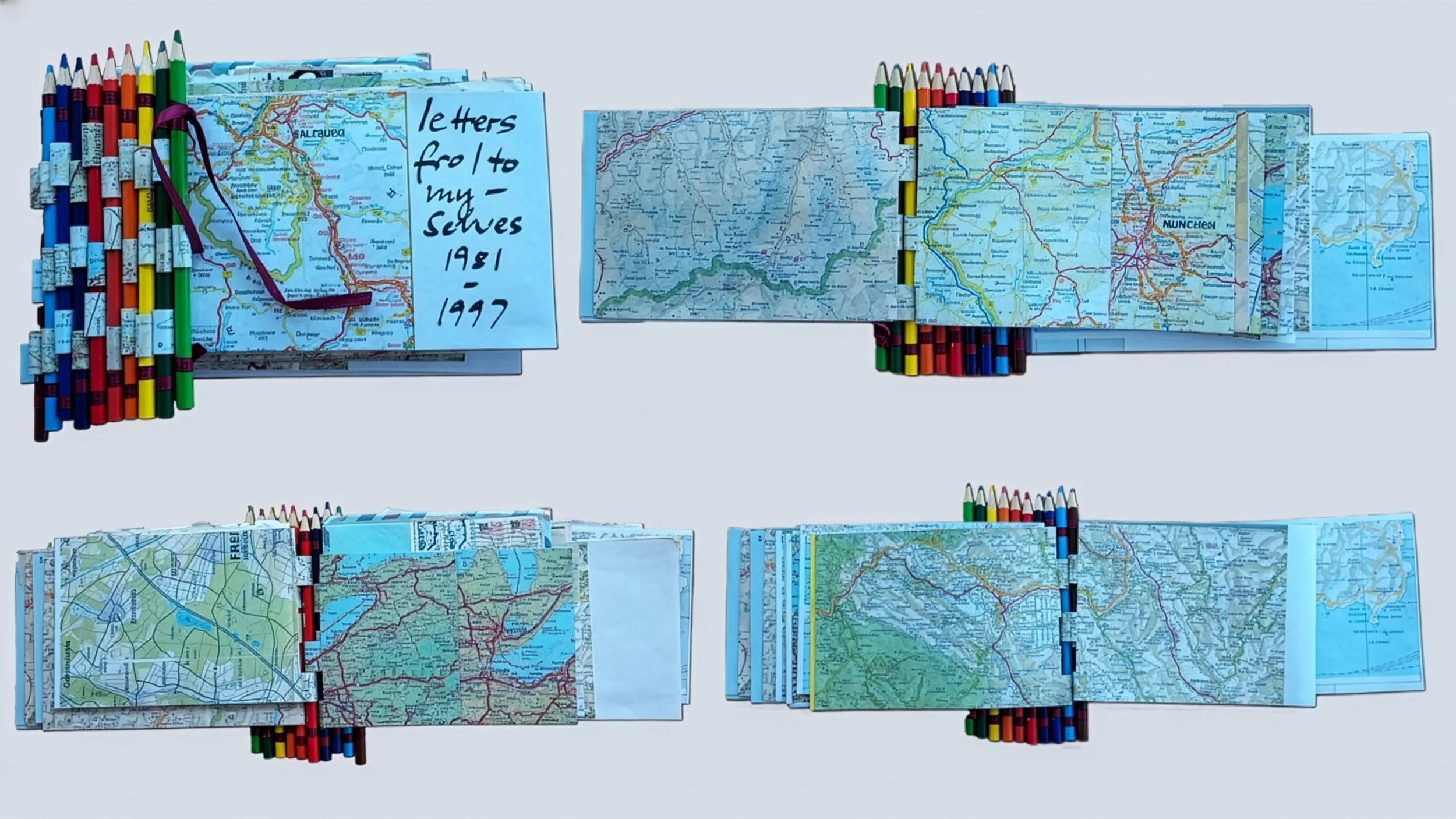
letters fro & to myselves (1981-1997) are enclosed in envelopes made from geographical maps of the respective places from which they were sent. These letters reveal bits and pieces of who I was once, expressing myself in letter writing to my parents, brother and grandparents. /para break/ Some of them have some kind of “historic relevance“. For instance the description of the Ried glacier in Valais, Switzerland and our successful crossing saved a picture of the glacier´s dimension which now after 42 years has retrieved so much, that the crossing to the Bordier Alpine Hut does not touch the glacier at all.
xyu
susanne eules is a German American transdisciplinary artist in the fields of experimental, visual, sonic poetry, performance, visual arts exploring Somatic poetics, Interspecies Translation and Innovative Poetics. German Award for Nature Writing 2023 for miami t:ex[i]ting. Poetry books and chapbooks, the latest nivolog, Contraband, UK 2023, anthology Natur/ver/dichten, Germany 2025.
Chris Partridge
As the Ink Began to weep
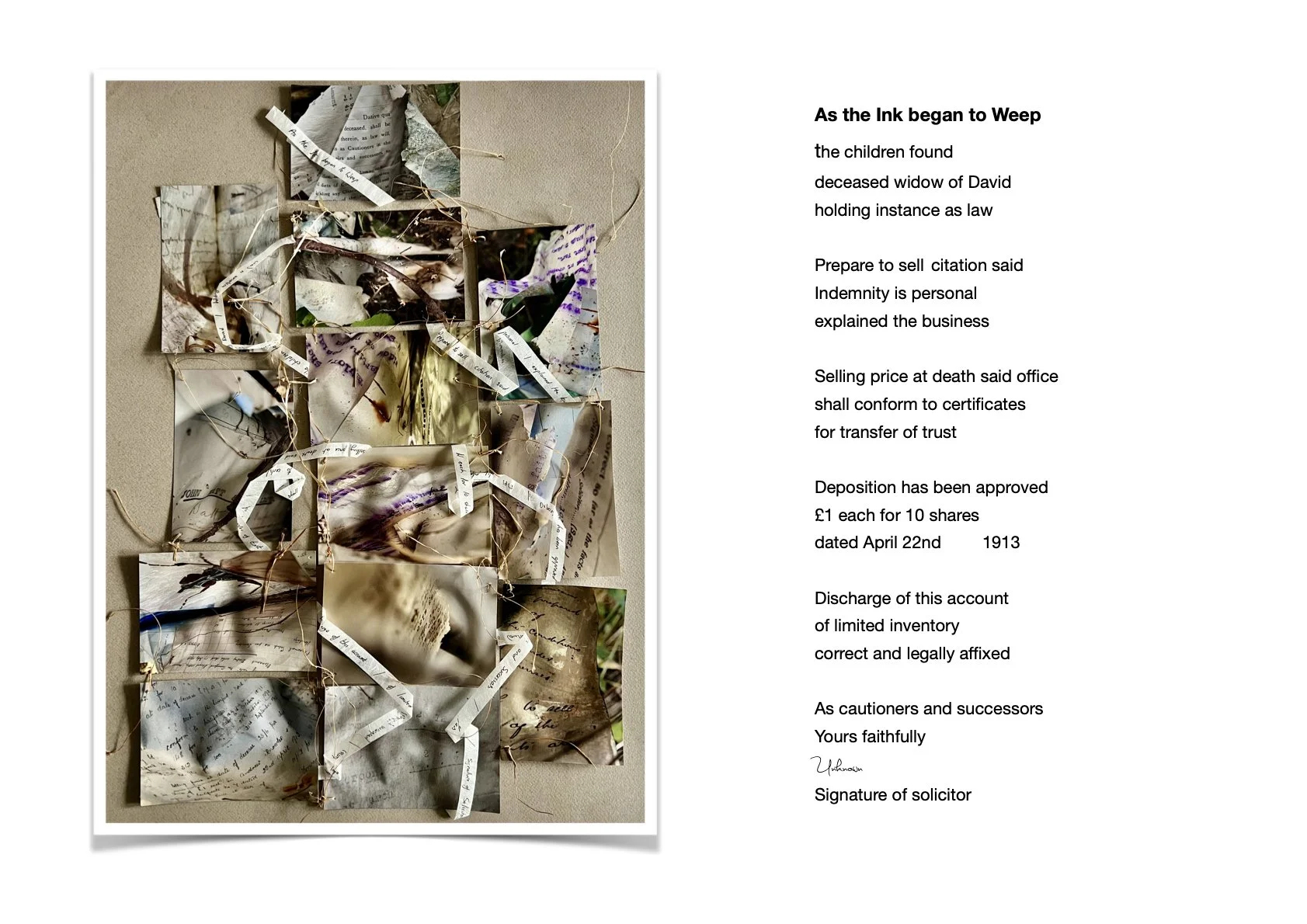
In a Small Brown Box
Chris Partridge is a visual artist and poet based in Northumberland. Over the last few years an old coal mine and the surrounding land has been at the centre of her work. A place to reflect, write, draw and be in conversation with. Her recent poetry collection, The Depth of Previous Working is Unknown (Broken Sleep Books, 2026), has been one of the fruits of this ongoing conversation with place, memory and impermanence.
Lucy Harvest Clarke
and we arrived
This track was formed using a found audio diary of my mother when she was travelling and recording to her parents back home. I layered it with vocals and instrumental audio that my partner had sent me from his children as we were getting to know each other. The piece materially reflects the desire to testimony our own version of the world. I wanted to reflect longing, temporality and to sanctify in this gesture the impossibility of these different parts ever meeting.
arrow/ broom
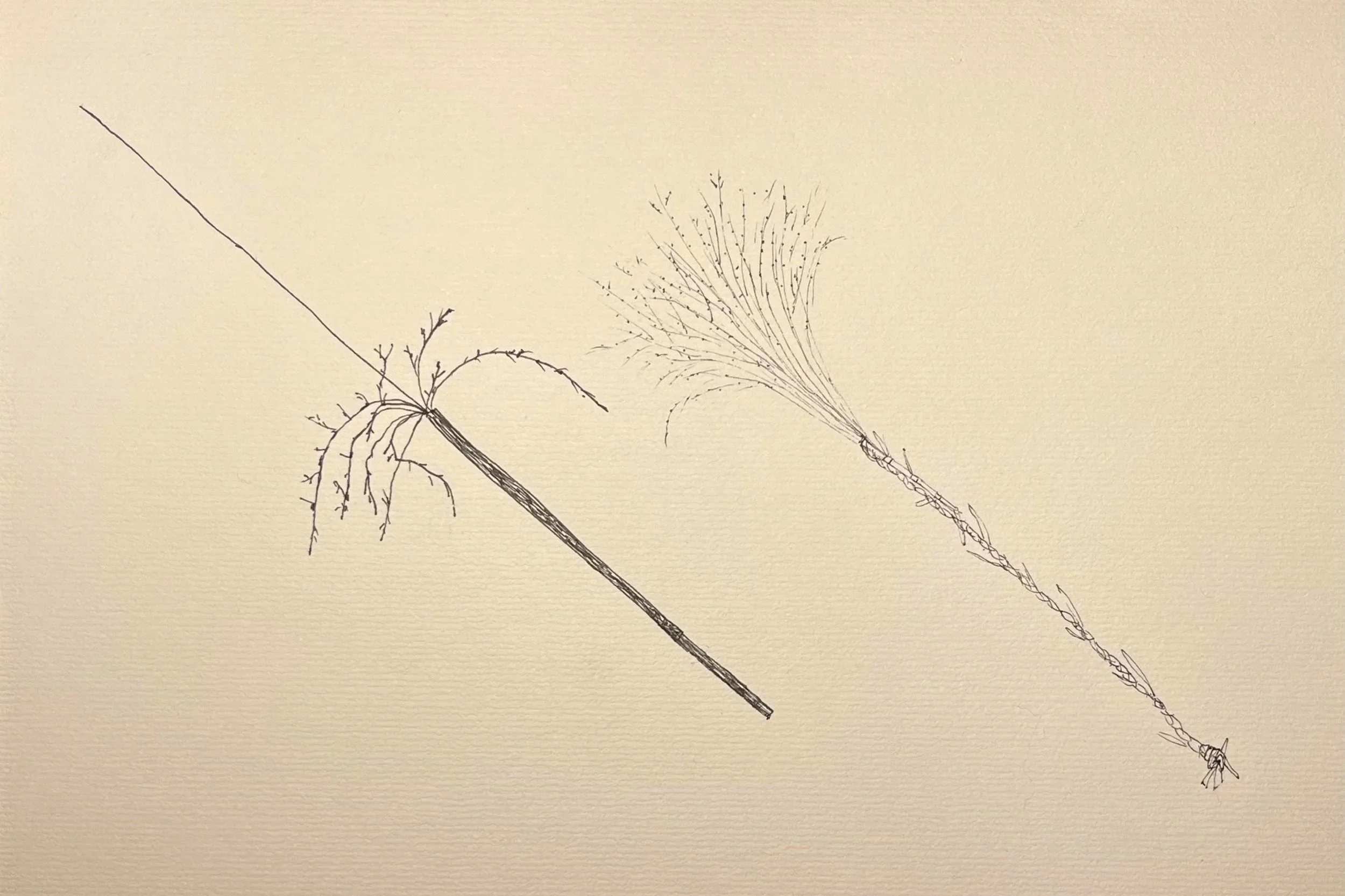
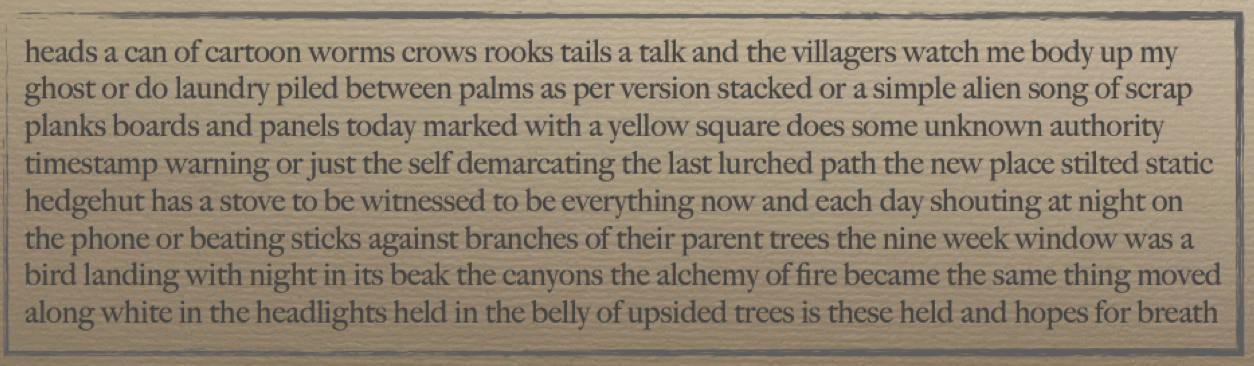
The first image is sketch of a branch of hedge growing through a tube on a wire. The second image is a sketch of a replica I made. These drawings serve as a reference point and a reminder of the simultaneous. The accompanying text reflects the history and current occupants of the hedgerow.
Lucy Harvest Clarke is a writer and artist working with poetry, text based art and installation. Her books include Silveronda (if p then q), EX3 (knives forks and spoons), BABA (Blart Books), A Light Worker (Broken Sleep Books) and The Perfect Hermit (forthcoming from Veer2). https://www.lucyharvestclarke.co.uk
Jennifer Spector
South Calanthia Watercloth
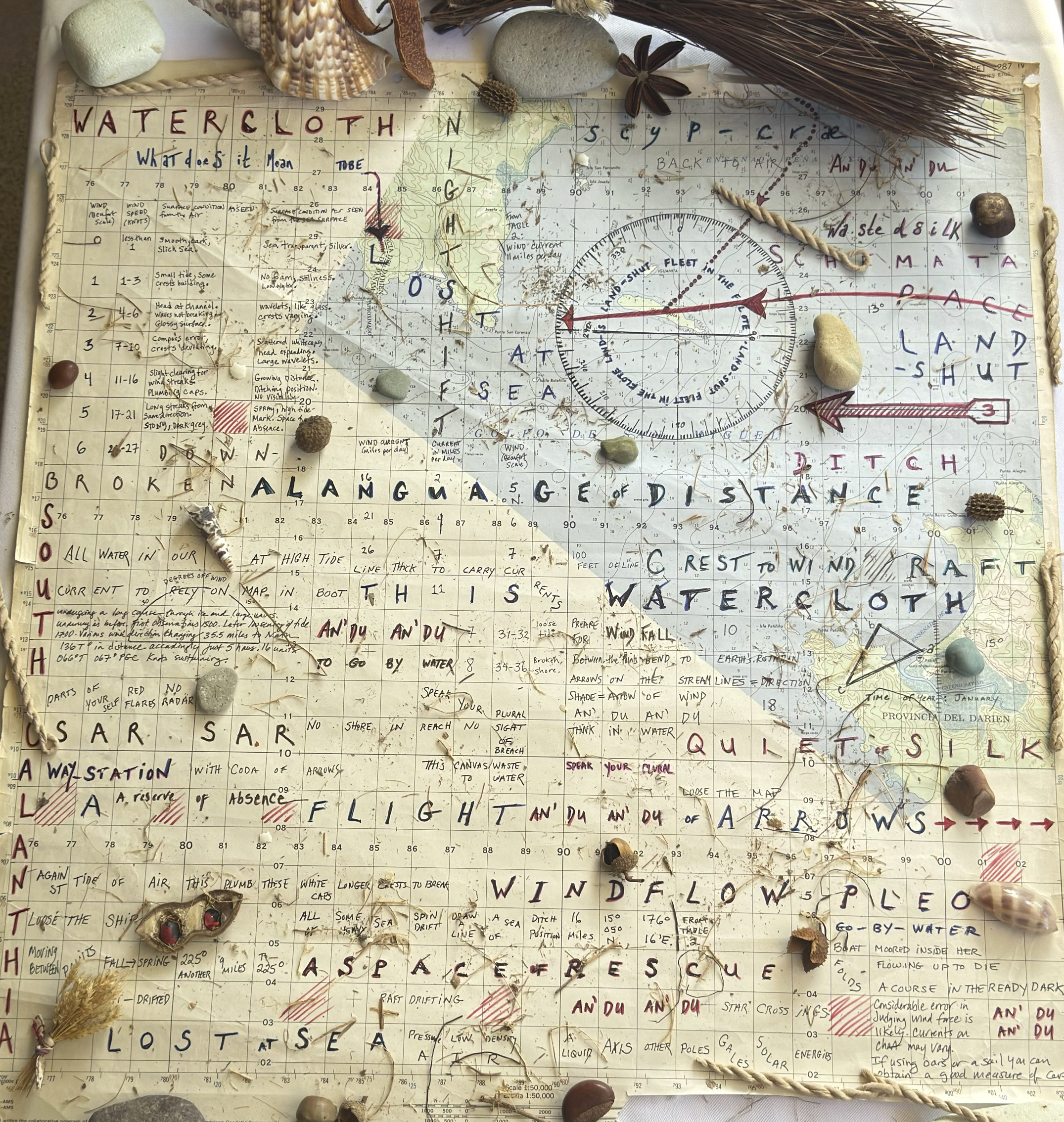
"Cloth Survival Drift Maps", designed during WWII by a British intelligence officer, were 'worn' by pilots to facilitate survival and rescue should an aircraft go down. These evasion maps, depicting large swathes of Europe, were initially printed on silk or mulberry paper, allowing them to be pliable, tolerate saturation with water and remain silent if crumpled, rolled or tucked in a boot. They could be easily hidden or wedged in small places, in a deck of cards, parcels with compasses, or set into a uniform's lining. As part of a pilot's escape kit, they were also useful as sling or tourniquet or as a water-filtering sheath.
Though ingenious, they did not prove successful, having been created with the belief that ocean circulation was steady and charts of mean currents reliable. As later studies revealed, ocean eddies were strong enough to modify currents and could even reverse them. As silk supplies grew scarce, by 1942 cloth escape maps were printed on cuprammonium (Bemberg silk), mulberry paper, calandered taffeta, or viscose rayon. Those that remain are housed in museum or private collections, some having been repurposed and designed as dresses or scarves in the mid 1940s.
South Calanthia Watercloth is a drift assemblage for a place that does not exist. It resides in suspension, lost at sea, in a language of distance. Without tangibile inclusion in an escape kit, survival is reimagined by way of water and paper, a watercloth exploring fixity of notions, such as rescue and wayfinding, reenvisioning what it is to search or yearn for home. If the once available construct of a silken map, worn on the body, could hold key information for survival, in what other language or sphere might there be such aids to navigation, when neither place nor kit offers what can be deftly held.
GLOSSARY
AN'DU' from Shetland, UK dialect; to maintain position of a boat in tide or wind by rowing gently.
FLOTE Old English; wave. Float in current usage, is an early Middle English merger of three Old English nouns: flota (fleet or boat), flote (flock or troop), and flot (a body of water). Old English meanings, now obsolete, evolved from being in a state of floating, to swimming, to a fleet of ships (12th-13th c)
LAND-SHUT from Herefordshire, West Midlands, UK dialect; flood.
PLÉO Ancient Greek; to go by water; sail; float.
SAR Pilots' glossary; an acronym for search and rescue, a unified, cooperative effort which seeks missing aircrafts and assists flyers needing to be found.
SCYP-CRŒFT Anglo-Saxon; an early meaning for navigation; later ship-craft.
Windward
Jennifer Spector is a poet from New York, living in Panama. Her work explores landscape and passages through plaited, poetic processes. She is the author of Hithe (Corbel Stone Press, 2021), and "Thacchen: The Dwelling Body in the Rough House" (chapter) in Dwelling: Cultural Representations of Inhabited Spaces (Palgrave Macmillan, 2024). Poetry and visual work has appeared in Shearsman, Reliquiae, 14 magazine, Towards an Experimental Ecology of Line, Chant de la Sirene, Molly Bloom, Nature & Sentience, Imminent, Alterity, Litmus, La Vague, Book of Hours: An Artist's Book for the Anthropocene, and PSi Fluid States-Performances of Unknowing. www.jenniferspectorstudio.com / insta: @jespejen
sarah rhys
Afon Tywi: Trace i and ii
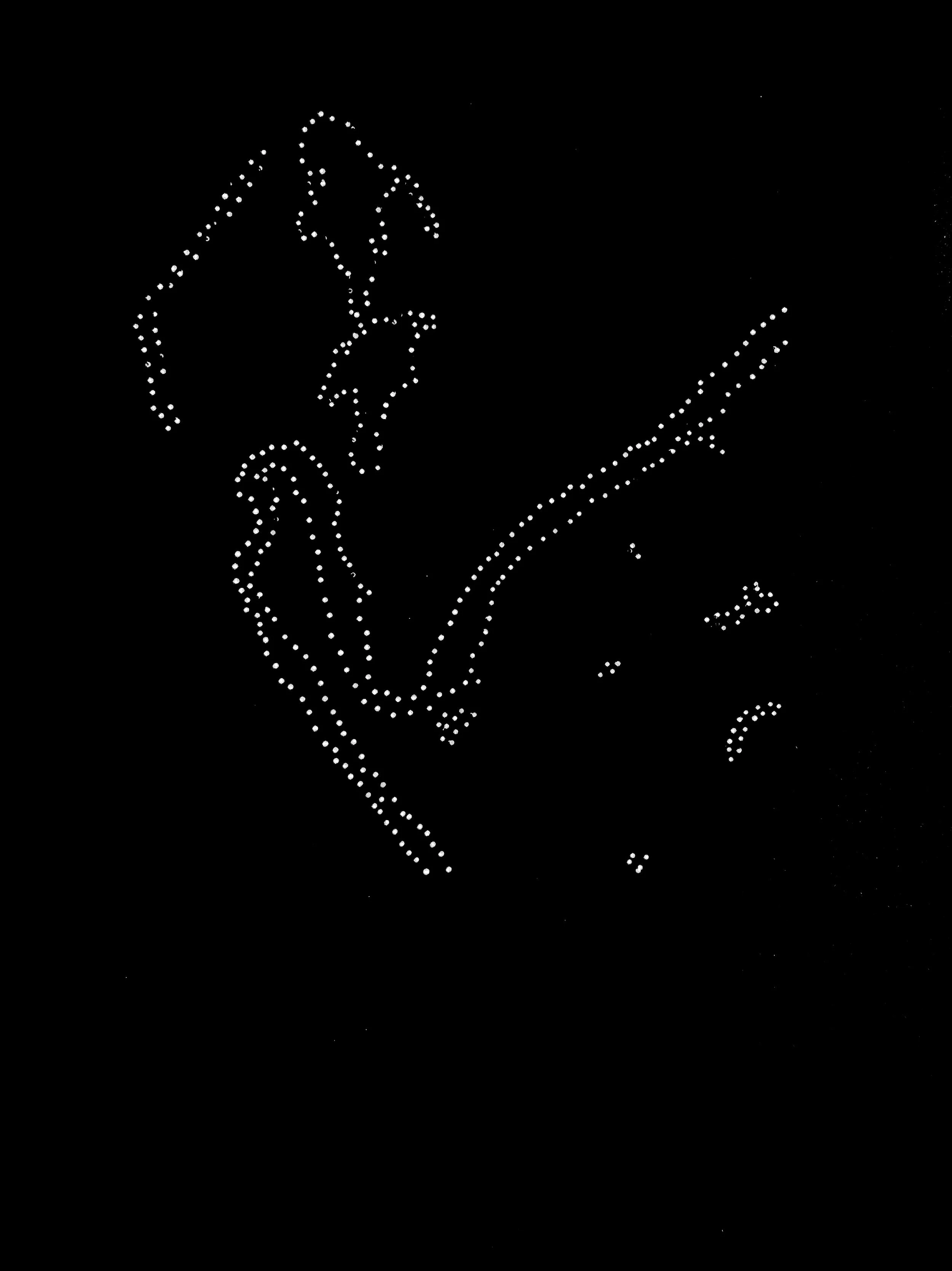
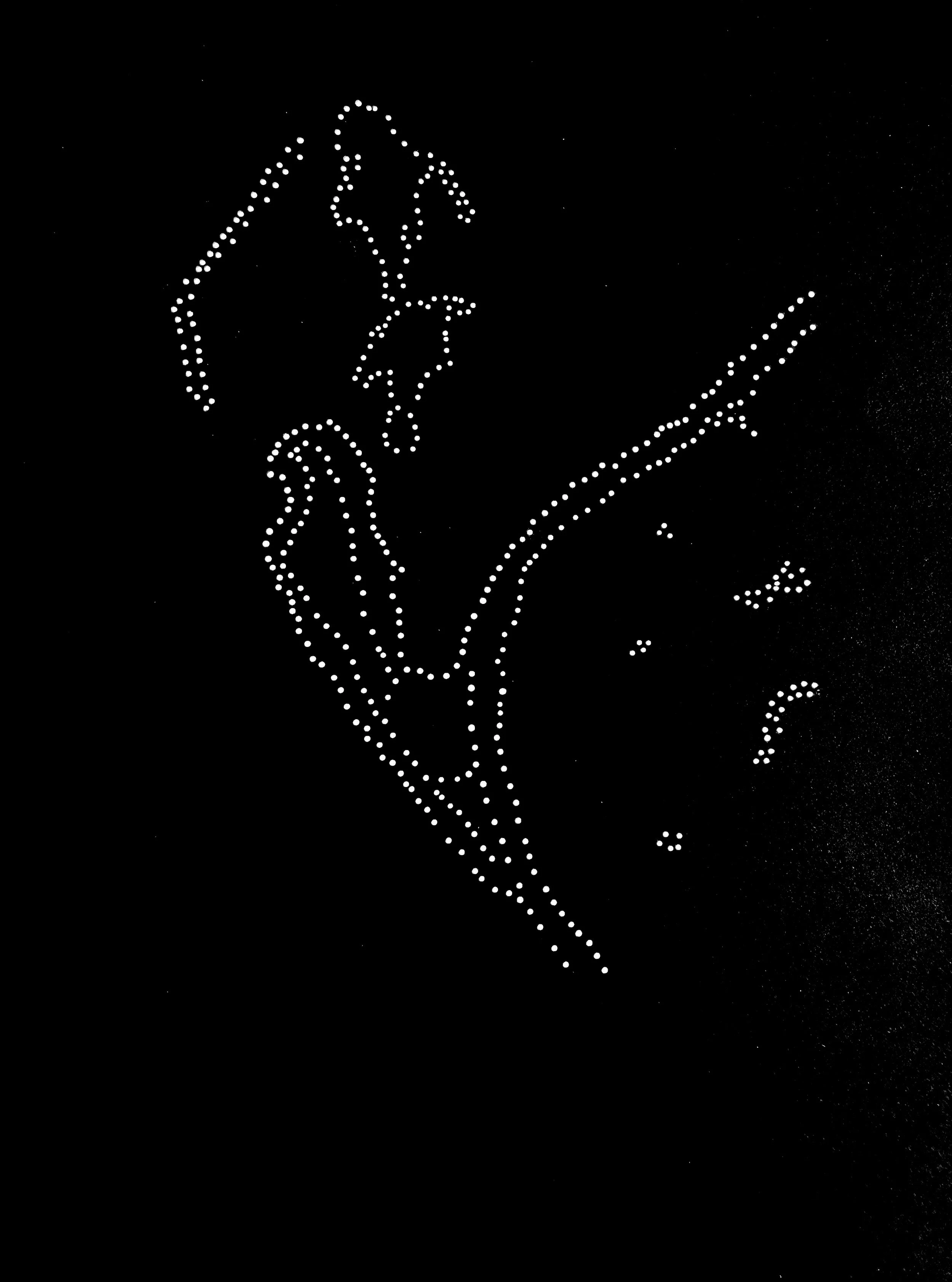
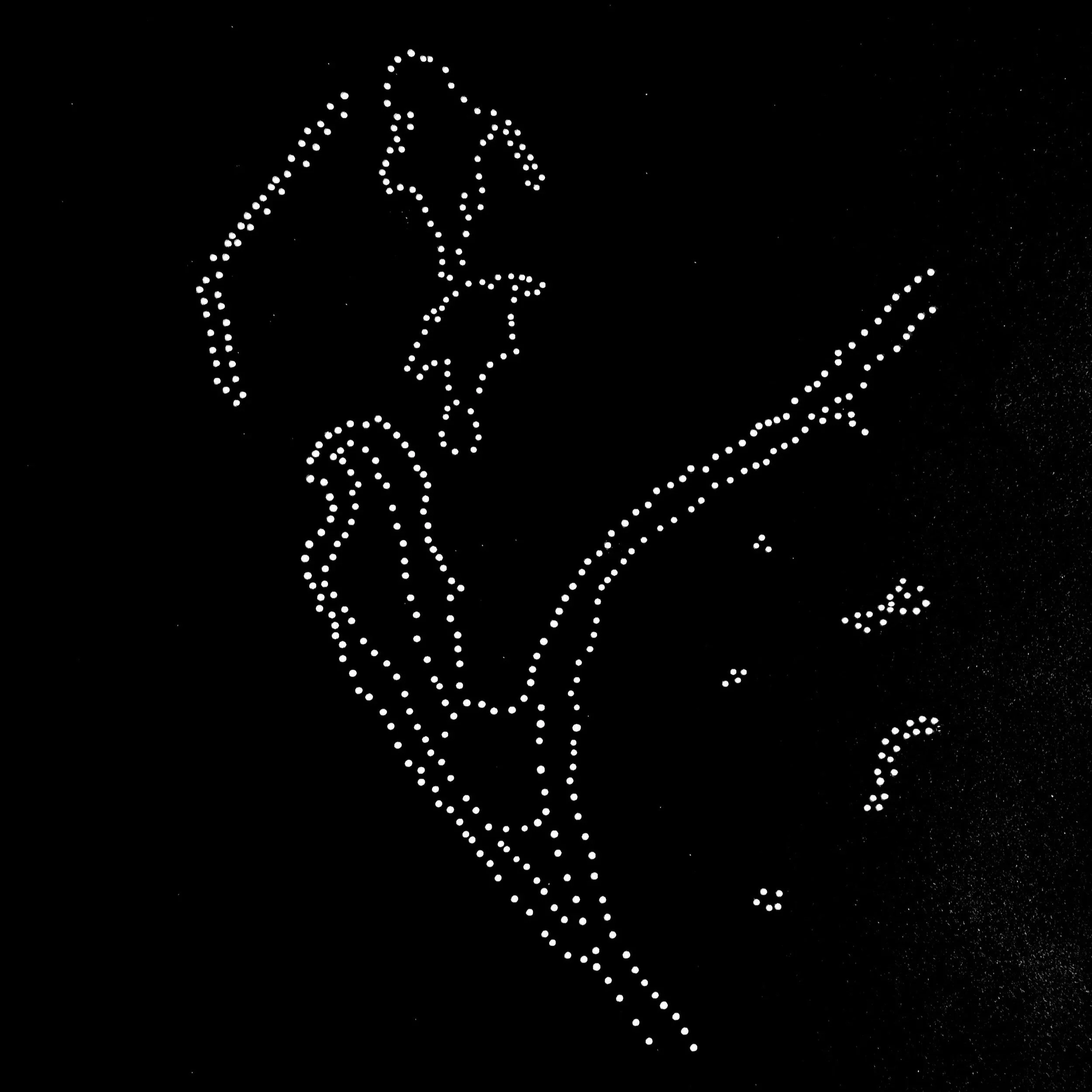
Materials: Black card with punched holes.
Both hole punch drawings show a segment of the Afon Tywi* - before and after a storm - the meander's bend was breached creating both an island and a new oxbow. There are scatterings of ghost oxbow lakes along the floodplain.
The abrupt overnight change in the river's course felt very dramatic- challenging her perception and memory of where the river had 'always flowed'.
* River Towy
Sarah Rhys is an interdisciplinary artist and educator living in Llansteffan Carmarthenshire and working between west Wales and Bristol. Sarah has a long term interest in the ‘trace’. Recent work includes Cwrwgyl Gwyn/ White Coracle and Vessel 7 x 7 2024/5. Sarah curates a sometimes gallery Oriel Archipelago in Llansteffan, West Wales and contributed to the publication 'HON- Artistiaid Benywaidd yng Nghymru/ Women Artists in Wales' published by the Hmm Foundation.
amanda Lynch
blobs & dots
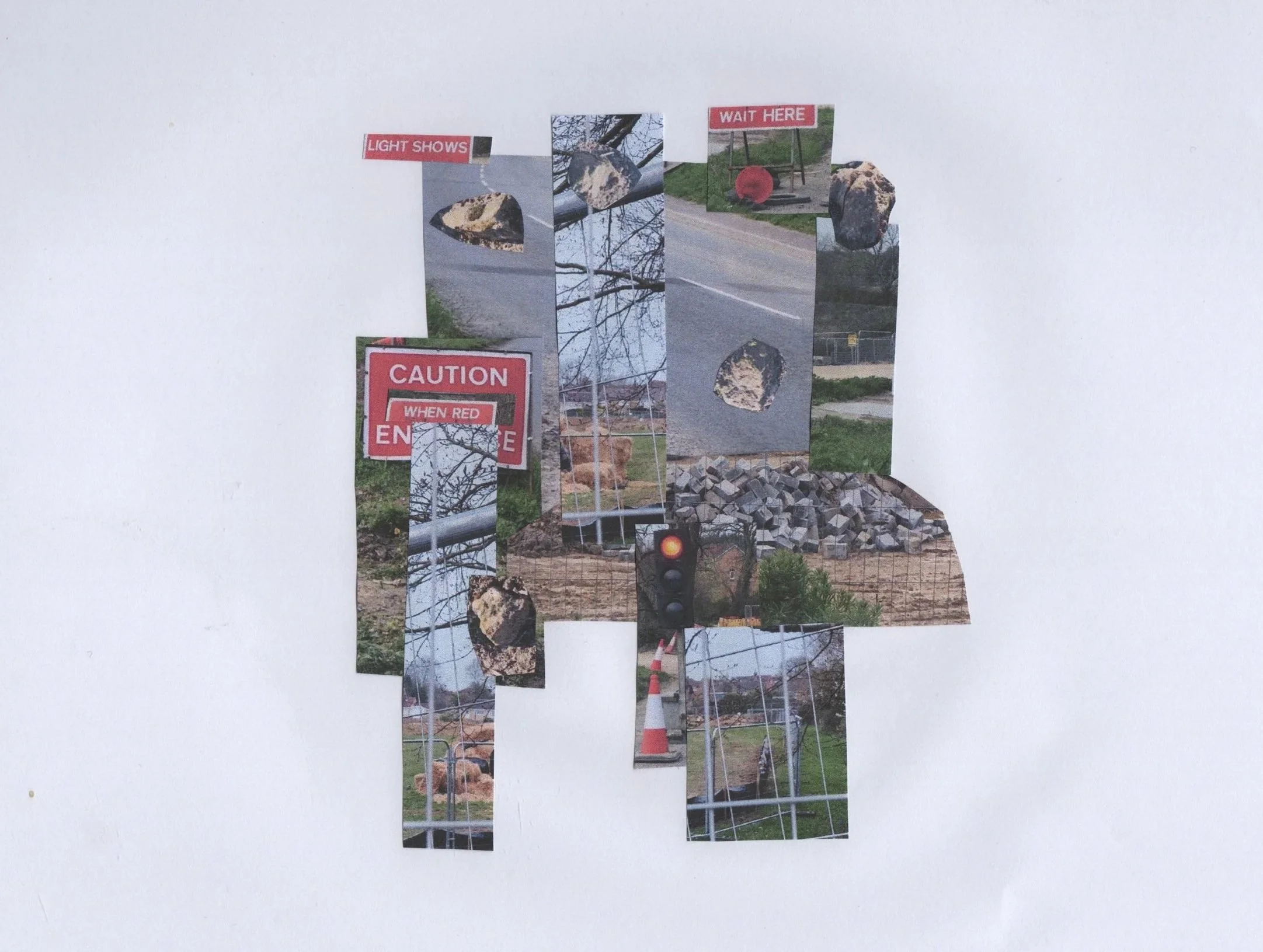
Amanda Lynch is a visual artist, researcher and curator exploring disability, social and cultural disablement, wealth, art history and women's representation. Through assemblage, collage, artist books, photography and mail art, I investigate what remains unspoken. Research, conversation and humour underpin my practice, challenging barriers while creating accessible opportunities for connection.
susie campbell
diptych
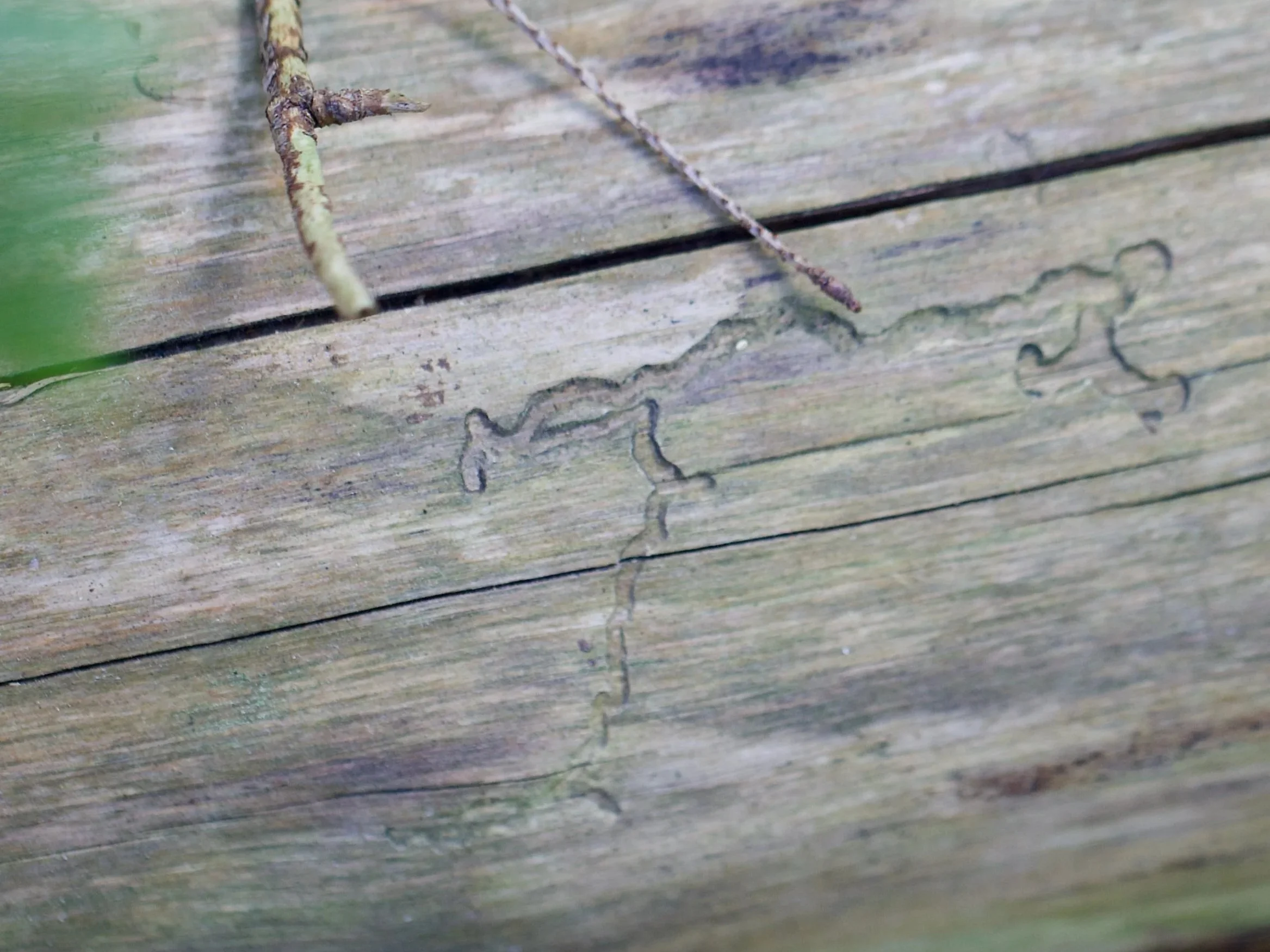
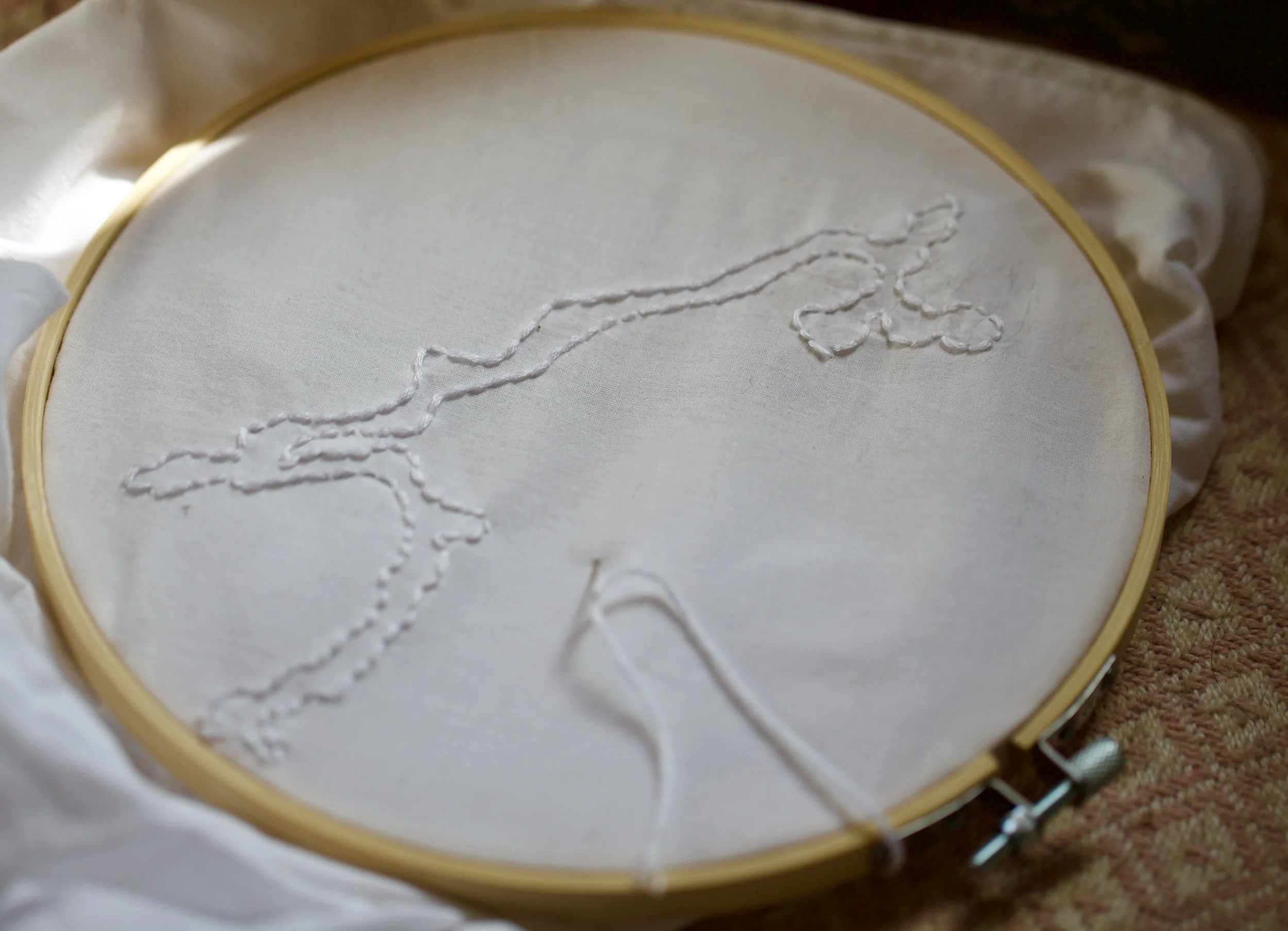
Materials: bark beetle traces made on dead wood, white embroidery thread, needle, and wooden hoop, white cotton fabric.
asterism
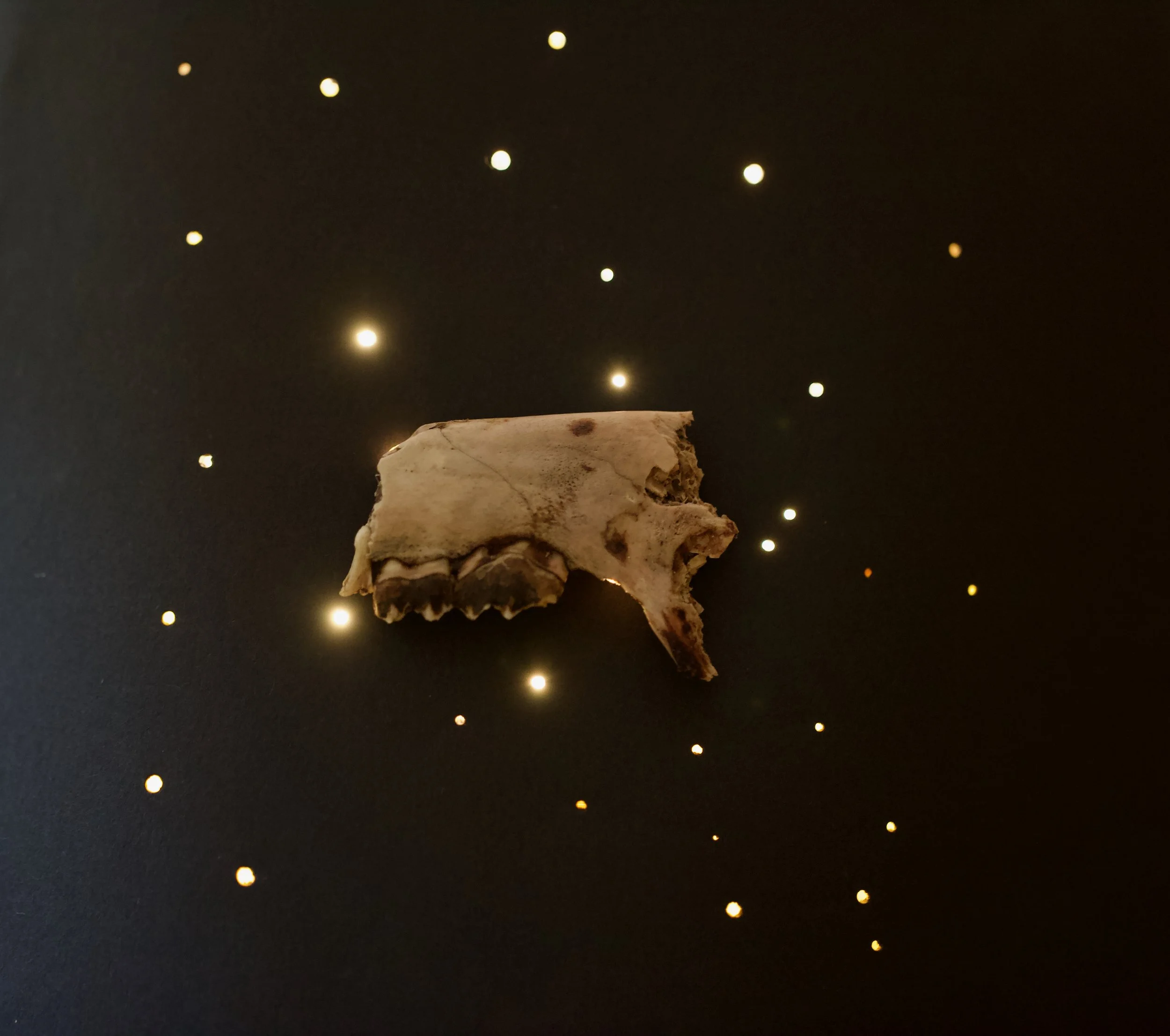
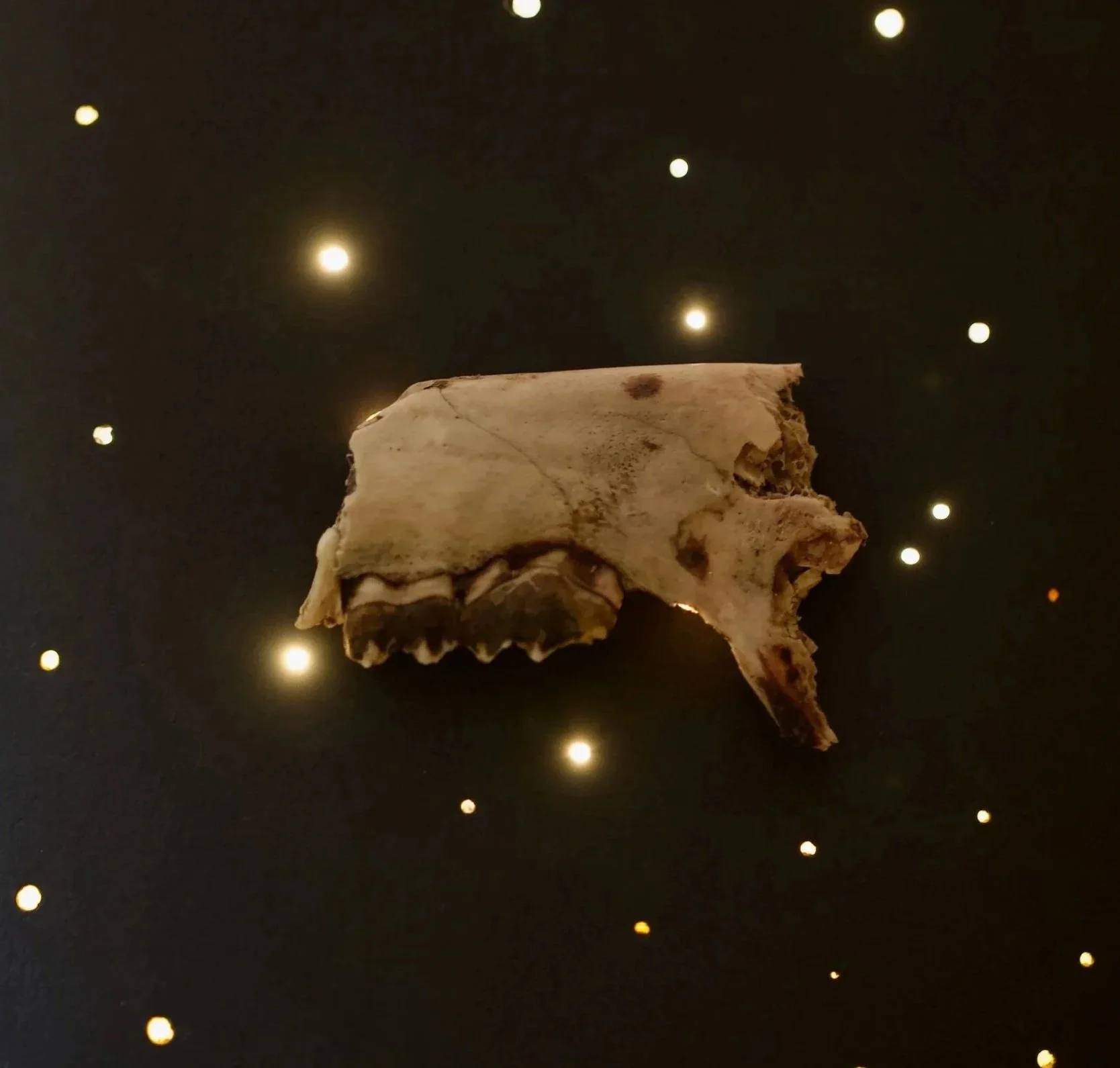
Materials: fragment of deer jawbone, black craft paper, perforations, desk lamp.
thirteen breaths
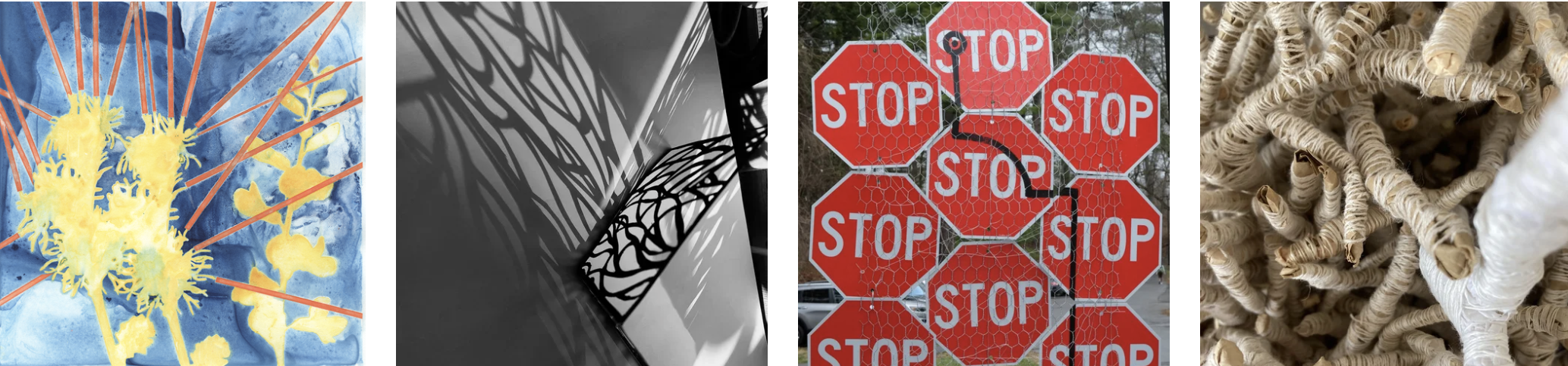
Materials: muslin cloth, craft knife cuts, light, shadow, air.
Audio and image made at Albury Downs ancient yew woodlands where I was accompanied by my dogs.
Susie Campbell makes poetry in textual, textile, visual, and aural forms. Her work engages with problematic histories and ecologies of her local place, its borderlines, what it has lost and what may be emerging. Her publications include Tenter (2020), Enclosures (2021), The Sleeping Place (2023), Wastelands (2025), and Sarsen (2026).
karen neuberg
wind and trees
Karen Neuberg is a Brooklyn, NY, poet and collagist who has found that she loves putting together videos during the foundation and advanced Experimental Ecology of Line courses.